Wednesday, November 8, 2006

Nobel Committee Broadens Definiton of Peace


©Banker to The Poor, Autobiography of Prof. Muhammad Yunus

Michael Renner, a Senior Researcher at the Worldwatch Institute, comments on the 2006 Nobel Peace Prize award. >>Full article

Alfred Nobel stated that the Prize be given to “the person who shall have done the most or the best work for fraternity between nations, for the abolition or reduction of standing armies and for the holding and promotion of peace congresses ”. Though the Norwegian Nobel Committee’s latest decision is grounded on a more modern principle; that “peace can not be achieved unless large population groups find ways in which to break out of poverty. Micro-credit is one such means. Development from below also serves to advance democracy and human rights.”

The 2006 Peace Prize, -awarded to micro-credit pioneer Muhammad Yunus and the Grameen Bank he founded-, may indeed draw criticism from traditional security analysts. Yet, although disarmament, conflict prevention, and reconciliation remain crucial in achieving peace, the nature of conflict has changed. And so did the variables of peace.

Working towards a conception of peace that is more than the mere absence of war demands a commitment to sustainable development, equity, and participatory democracy. We need to enhance our comprehension of the ways in which a multitude of social, economic, environmental, and demographic pressures interact, and how these dynamics play out in light of ethnic and political fault lines.

© Worldwatch Institute/ Eye on Earth

Nobel Committee Broadens Definiton of Peace


©Banker to The Poor, Autobiography of Prof. Muhammad Yunus

Michael Renner, a Senior Researcher at the Worldwatch Institute, comments on the 2006 Nobel Peace Prize award. >>Full article

Alfred Nobel stated that the Prize be given to “the person who shall have done the most or the best work for fraternity between nations, for the abolition or reduction of standing armies and for the holding and promotion of peace congresses ”. Though the Norwegian Nobel Committee’s latest decision is grounded on a more modern principle; that “peace can not be achieved unless large population groups find ways in which to break out of poverty. Micro-credit is one such means. Development from below also serves to advance democracy and human rights.”

The 2006 Peace Prize, -awarded to micro-credit pioneer Muhammad Yunus and the Grameen Bank he founded-, may indeed draw criticism from traditional security analysts. Yet, although disarmament, conflict prevention, and reconciliation remain crucial in achieving peace, the nature of conflict has changed. And so did the variables of peace.

Working towards a conception of peace that is more than the mere absence of war demands a commitment to sustainable development, equity, and participatory democracy. We need to enhance our comprehension of the ways in which a multitude of social, economic, environmental, and demographic pressures interact, and how these dynamics play out in light of ethnic and political fault lines.

© Worldwatch Institute/ Eye on Earth

Tuesday, November 7, 2006

The USA-Iran Team wins special recognition at the Mondialogo School Contest Award Ceremony

The awaited winners list of the 2006 Mondialogo School Contest initiated by UNESCO and DaimlerChrysler to promote intercultural learning among young people was announced Monday evening in Rome. This year 35,000 students from 138 nations took part in the competition.


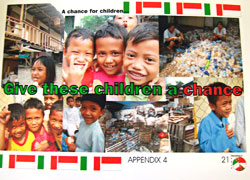
The winner team is one that brought together students from schools in Indonesia and Italy for raising money to provide free schooling to Indonesian children living off garbage dumps.


Second prize was awarded to a team from Japan and Turkey for a game they designed about cultural heritage protection and on how to respond to natural disasters.

The third place in the contest was shared between partner teams from Congo-Poland and a team from the Czech Republic and Argentina. The Congo-Poland team published a magazine dedicated to the life of children in these countries, while the Czech Republic-Argentina team produced an inspiring video report highlighting similarities in their everyday lives.

Special recognition for commitment to dialogue was given to a team from Iran and the U.S.A., for their project on water supply. Because direct communication between the two countries proved difficult, the partner team used intermediaries in Bolivia and Pakistan to complete their project.
Further special recognition went to a Romania-Yemen partner team for outstanding creativity. Team members set up a model intercultural community whose architecture unites Christian and Muslim elements in a single city.
A partner team from South Africa and Australia also received special recognition for a project on HIV-AIDS education.

Visit the Mondialogo School Contest Website
Read our previous related postings
*The Mondialogo School Contest
*Call for Applications: The Mondialogo Engineering Award 2006-2007

© Mondialogo

The USA-Iran Team wins special recognition at the Mondialogo School Contest Award Ceremony

The awaited winners list of the 2006 Mondialogo School Contest initiated by UNESCO and DaimlerChrysler to promote intercultural learning among young people was announced Monday evening in Rome. This year 35,000 students from 138 nations took part in the competition.


The winner team is one that brought together students from schools in Indonesia and Italy for raising money to provide free schooling to Indonesian children living off garbage dumps.


Second prize was awarded to a team from Japan and Turkey for a game they designed about cultural heritage protection and on how to respond to natural disasters.

The third place in the contest was shared between partner teams from Congo-Poland and a team from the Czech Republic and Argentina. The Congo-Poland team published a magazine dedicated to the life of children in these countries, while the Czech Republic-Argentina team produced an inspiring video report highlighting similarities in their everyday lives.

Special recognition for commitment to dialogue was given to a team from Iran and the U.S.A., for their project on water supply. Because direct communication between the two countries proved difficult, the partner team used intermediaries in Bolivia and Pakistan to complete their project.
Further special recognition went to a Romania-Yemen partner team for outstanding creativity. Team members set up a model intercultural community whose architecture unites Christian and Muslim elements in a single city.
A partner team from South Africa and Australia also received special recognition for a project on HIV-AIDS education.

Visit the Mondialogo School Contest Website
Read our previous related postings
*The Mondialogo School Contest
*Call for Applications: The Mondialogo Engineering Award 2006-2007

© Mondialogo

Monday, November 6, 2006

Alice Ilchman; Advisor to Americans for UNESCO


Alice Stone Ilchman was a member of the Advisory Council of Americans for UNESCO, sharing her great knowledge and experience in education and international affairs. She died in August at her Bronxville home from complications of pancreatic cancer. She was 71. We mourn her loss.

Dr. Ilchman was dean at Wellesley College for five years and president of Sarah Lawrence College in Bronxville, N.Y., for 17. She was appointed dean of the college and professor of economics and education at Wellesley in 1973. Dr. Ilchman was instrumental in establishing Wellesley's Center for Research on Women. Her accomplishments while she was at the helm of Sarah Lawrence from 1981 to 1998 were many. Her legacy includes two new buildings, 10 faculty chairs, three overseas programs, and stronger fiscal health.

During her tenure at Sarah Lawrence, Dr. Ilchman received an Honorary Doctorate from Mt. Holyoke College (1982), the Maternity Association Carola Warburg Rothschild Award (1991), the Maxwell "Spirit of Public Service Award" (1994), The Wellesley College Distinguished Service Award (1995), a Fulbright Honor (1996), and the Alice Ilchman Award for Public Service (1998).

She served as assistant secretary of state for educational and cultural affairs during the Carter administration for two years, with responsibility for the newly created United States Information Agency, the Fulbright program, US libraries abroad, and the international visitor program.

For 13 years, she was a member of the board of the Rockefeller Foundation. At the time of her death, she was director of the Jeannette K. Watson Fellows program, which creates paid summer internships for first-generation college students in New York City.

She had a long interest in and association with India. In 1962 and 1963, she and her husband lived in Delhi and Rajasthan, while she worked on her dissertation on rural development in India for the London School of Economics. She lived in Delhi again in 1968 and 1969. While at the University of California at Berkeley, she directed three Peace Corps training projects for India and co-taught the school's first interdisciplinary South Asian studies course.

Dr. Ilchman graduated from Mount Holyoke College in 1957 and was a member of its board of trustees for 10 years. She earned her master's degree from the Maxwell School of Citizenship and Public Affairs at Syracuse University and her doctorate from the London School of Economics and Politics in 1965.

In addition to her husband and son, Dr. Ilchman leaves a daughter, Sarah, of New York City; two sisters, Nancy Dickinson of Indianapolis and Elizabeth Stone of Los Angeles; and a brother, Donald C. Stone Jr. of Oakland, Calif.

Read obituaries from:
* The Boston Globe

* Sarah Lawrence College

* The New York Times

* The Washington Post

Alice Ilchman; Advisor to Americans for UNESCO


Alice Stone Ilchman was a member of the Advisory Council of Americans for UNESCO, sharing her great knowledge and experience in education and international affairs. She died in August at her Bronxville home from complications of pancreatic cancer. She was 71. We mourn her loss.

Dr. Ilchman was dean at Wellesley College for five years and president of Sarah Lawrence College in Bronxville, N.Y., for 17. She was appointed dean of the college and professor of economics and education at Wellesley in 1973. Dr. Ilchman was instrumental in establishing Wellesley's Center for Research on Women. Her accomplishments while she was at the helm of Sarah Lawrence from 1981 to 1998 were many. Her legacy includes two new buildings, 10 faculty chairs, three overseas programs, and stronger fiscal health.

During her tenure at Sarah Lawrence, Dr. Ilchman received an Honorary Doctorate from Mt. Holyoke College (1982), the Maternity Association Carola Warburg Rothschild Award (1991), the Maxwell "Spirit of Public Service Award" (1994), The Wellesley College Distinguished Service Award (1995), a Fulbright Honor (1996), and the Alice Ilchman Award for Public Service (1998).

She served as assistant secretary of state for educational and cultural affairs during the Carter administration for two years, with responsibility for the newly created United States Information Agency, the Fulbright program, US libraries abroad, and the international visitor program.

For 13 years, she was a member of the board of the Rockefeller Foundation. At the time of her death, she was director of the Jeannette K. Watson Fellows program, which creates paid summer internships for first-generation college students in New York City.

She had a long interest in and association with India. In 1962 and 1963, she and her husband lived in Delhi and Rajasthan, while she worked on her dissertation on rural development in India for the London School of Economics. She lived in Delhi again in 1968 and 1969. While at the University of California at Berkeley, she directed three Peace Corps training projects for India and co-taught the school's first interdisciplinary South Asian studies course.

Dr. Ilchman graduated from Mount Holyoke College in 1957 and was a member of its board of trustees for 10 years. She earned her master's degree from the Maxwell School of Citizenship and Public Affairs at Syracuse University and her doctorate from the London School of Economics and Politics in 1965.

In addition to her husband and son, Dr. Ilchman leaves a daughter, Sarah, of New York City; two sisters, Nancy Dickinson of Indianapolis and Elizabeth Stone of Los Angeles; and a brother, Donald C. Stone Jr. of Oakland, Calif.

Read obituaries from:
* The Boston Globe

* Sarah Lawrence College

* The New York Times

* The Washington Post
Saturday, November 4, 2006

"National Geographic rates best and worst"

Photograph by MIchael Yamashita

Read the full article in The Seattle Times of November 3, 2006.

"The (National Geographic) magazine's November-December issue had 94 World Heritage sites evaluated by experts in ecology, sustainable tourism, preservation and other fields, to determine which sites were at risk from development or environmental pressures and which ones were being preserved and promoted appropriately.

"The magazine's "best-rated" World Heritage sites were Norway's West Fjords, followed by Vezelay in France, which is known for its abbey and medieval architecture; Mexico's Guanajuato, which dates to the 16th century; and Alhambra, Granada and Cordoba in Spain.......

""Destinations in trouble" were identified as Stonehenge, England; China's Great Wall; Machu Picchu, Peru; Acropolis, Greece; Egypt's pyramids; and Ha Long Bay, Vietnam."

From an earlier National Geographic article* in National Geographic:
UNESCO officials do not see the list as a mere trophy case of superlative places. World Heritage status commits the home nation to protect the designated location. And if a site—through natural disaster, war, pollution, or lack of funds—begins to lose its value, nations that have signed the treaty must assist, if possible, in emergency aid campaigns. To date 172 of the world’s 192 nations have signed the treaty.

The World Heritage program has scored high-profile successes. It exerted pressure to halt a highway near Egypt’s Giza Pyramids, block a salt mine at a gray whale nursery in Mexico, and cancel a dam proposal above Africa’s Victoria Falls. Its funds, provided by dues from the treaty’s signers, have hired park rangers, bought parkland, built visitor centers, and restored temples.

It relies on persuasive powers more than legal threats, but at age 30 the World Heritage initiative has quietly become a force for appreciating and safeguarding the world’s special places.
*"They need a world of support, and they’ve got it. Today 730 World Heritage sites find salvation in the United Nations," feature by Tom O’Neil, National Geographic Magazine, October 2002.