Tuesday, March 27, 2007

Albert V. Baez -- In Memoriam

Albert V. Baez, the first director of science education at UNESCO, died last Tuesday, of what his family described as "natural causes," in San Mateo County, California. He was 94.

Dr. Baez was the director of the science education program of UNESCO from 1961-67. During that period he organized and led a program to improve science education in secondary schools worldwide. The program included projects to improve physics education in Latin America, chemistry education in Asia, biology education in Africa, and mathematics education in the Arab states. The trail breaking program introduced simple, inexpensive kits to allow science experiments in secondary schools, produced films, and utilized programmed education techniques (which were very innovative at the time) for the teachers of science. The work depended significantly on Dr. Baez' earlier participation in the Physics Science Studies Committee which helped to improve physics education in U.S. secondary schools.

Previously, in 1951, he had served UNESCO in Baghdad, where he taught at Baghdad University. In the 1980s, he served as chairman of the Commission on Education for the International Union for Conservation of Nature and Natural Resources.

Dr. Baez was a distinguished physicist, known professionally as the co-inventor (in 1948) of the X-ray reflection microscope. He served on the faculties of the Massachusetts Institute of Technology, Harvard, Stanford, UC Berkeley and other universities. As a physics professor and a pacifist, he refused to use his considerable expertise to advance the nuclear arms race during the Cold War.

In retirement, he served as president of Vivamos Mejor (Let Us Live Better), an organization is dedicated to improving the quality of life through science-based education and community development projects in Latin America. He was active in the work of Bread and Roses, an organization founded by his daughter Mimi Farina to bring free live music to people confined in institutions - jails, hospitals, juvenile facilities and rest homes. He endowed the Hispanic Engineer Albert Baez Award, which is given for Outstanding Technical Contribution to Humanity.

In 1956 (with W.C. Nixon) he published Lectures on the X-ray Microscope, and in 1967 he wrote The New College Physics: A Spiral Approach. He co-authored The Environment and Science and Technology Education, published in 1987, and with his daughter, Joan Baez, the memoir A Year in Baghdad in 1988.

To those in the international community interested in science education, he is known as a founding father of the discipline. To the general public he is perhaps better known as the father who introduced his daughters, Joan Baez and Mimi Farina to music, to the love of peace, and to social responsibility.

Dr. Baez was born on November 15, 1912, in Puebla, Mexico, and came to the United States with his family at two years of age. He received a bachelor's degree in mathematics from Drew University, a master's degree in physics from Syracuse University, a master's degree in mathematics and a doctorate in physics from Stanford University.

Dr. Baez is survived by his wife Joan Bridge Baez of Woodside, Calif.; and daughters Joan Baez and Pauline Bryan of Carmel Valley, Calif.

A Quaker memorial celebration was planned for May.

Read Dr. Baez' obituaries in:
Albert V. Baez -- In Memoriam

Albert V. Baez, the first director of science education at UNESCO, died last Tuesday, of what his family described as "natural causes," in San Mateo County, California. He was 94.

Dr. Baez was the director of the science education program of UNESCO from 1961-67. During that period he organized and led a program to improve science education in secondary schools worldwide. The program included projects to improve physics education in Latin America, chemistry education in Asia, biology education in Africa, and mathematics education in the Arab states. The trail breaking program introduced simple, inexpensive kits to allow science experiments in secondary schools, produced films, and utilized programmed education techniques (which were very innovative at the time) for the teachers of science. The work depended significantly on Dr. Baez' earlier participation in the Physics Science Studies Committee which helped to improve physics education in U.S. secondary schools.

Previously, in 1951, he had served UNESCO in Baghdad, where he taught at Baghdad University. In the 1980s, he served as chairman of the Commission on Education for the International Union for Conservation of Nature and Natural Resources.

Dr. Baez was a distinguished physicist, known professionally as the co-inventor (in 1948) of the X-ray reflection microscope. He served on the faculties of the Massachusetts Institute of Technology, Harvard, Stanford, UC Berkeley and other universities. As a physics professor and a pacifist, he refused to use his considerable expertise to advance the nuclear arms race during the Cold War.

In retirement, he served as president of Vivamos Mejor (Let Us Live Better), an organization is dedicated to improving the quality of life through science-based education and community development projects in Latin America. He was active in the work of Bread and Roses, an organization founded by his daughter Mimi Farina to bring free live music to people confined in institutions - jails, hospitals, juvenile facilities and rest homes. He endowed the Hispanic Engineer Albert Baez Award, which is given for Outstanding Technical Contribution to Humanity.

In 1956 (with W.C. Nixon) he published Lectures on the X-ray Microscope, and in 1967 he wrote The New College Physics: A Spiral Approach. He co-authored The Environment and Science and Technology Education, published in 1987, and with his daughter, Joan Baez, the memoir A Year in Baghdad in 1988.

To those in the international community interested in science education, he is known as a founding father of the discipline. To the general public he is perhaps better known as the father who introduced his daughters, Joan Baez and Mimi Farina to music, to the love of peace, and to social responsibility.

Dr. Baez was born on November 15, 1912, in Puebla, Mexico, and came to the United States with his family at two years of age. He received a bachelor's degree in mathematics from Drew University, a master's degree in physics from Syracuse University, a master's degree in mathematics and a doctorate in physics from Stanford University.

Dr. Baez is survived by his wife Joan Bridge Baez of Woodside, Calif.; and daughters Joan Baez and Pauline Bryan of Carmel Valley, Calif.

A Quaker memorial celebration was planned for May.

Read Dr. Baez' obituaries in:

Friday, March 23, 2007

UNESCO Position Paper on Globalization

This paper is a contribution to the discussion of the implications of globalization for higher education. It is one in a series of UNESCO position papers intended to clearly state the Organization's views and thinking on key issues relevant to education today. It provides an overview of debates on the opportunities and challenges posed by globalization to higher education, and identifies the United Nations and UNESCO texts and normative instruments that are relevant to the discussion.

The paper seeks:
* to further the exploration and understanding of higher education in a more globalized society;
* to recognize the importance that UNESCO gives to the topic; and
* consequently to outline UNESCO’s position in this regard, based on basic United Nations documents and UNESCO’s mandate for action in this field.
It focuses on UNESCO’s standard-setting, capacity building and clearinghouse functions to assist Member States in the formulation of appropriate policies and strategies to meet the challenges posed to higher education by globalization. As this is a rapidly developing field, the outlined position is likely to evolve as the debate progresses and will be subject to subsequent revisions. PDF document - 27 pages.

UNESCO Position Paper on Globalization

This paper is a contribution to the discussion of the implications of globalization for higher education. It is one in a series of UNESCO position papers intended to clearly state the Organization's views and thinking on key issues relevant to education today. It provides an overview of debates on the opportunities and challenges posed by globalization to higher education, and identifies the United Nations and UNESCO texts and normative instruments that are relevant to the discussion.

The paper seeks:
* to further the exploration and understanding of higher education in a more globalized society;
* to recognize the importance that UNESCO gives to the topic; and
* consequently to outline UNESCO’s position in this regard, based on basic United Nations documents and UNESCO’s mandate for action in this field.
It focuses on UNESCO’s standard-setting, capacity building and clearinghouse functions to assist Member States in the formulation of appropriate policies and strategies to meet the challenges posed to higher education by globalization. As this is a rapidly developing field, the outlined position is likely to evolve as the debate progresses and will be subject to subsequent revisions. PDF document - 27 pages.

Wednesday, March 21, 2007

Emily Vargas-Baron has suggested that you may be interested in this new publication:

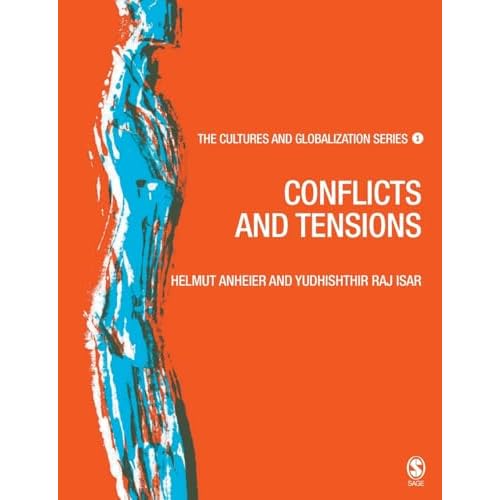
Cultures and Globalization: Conflicts and Tensions
Edited by: Helmut K. Anheier and Yudhushthir Raj Isar
Sage Publications, 2007.

Publishers Description:
The world's cultures and their forms of creation, presentation, and preservation are deeply affected by globalization in ways that are inadequately documented and understood. This book is designed to fill this glaring gap in our knowledge.

Analyzing the relationship between globalization and cultures is the core objective of this volume. In it leading experts track cultural trends in all regions of the world, covering issues ranging from the role of cultural difference in politics and governance to heritage conservation, artistic expression, and the cultural industries. The book also includes a data section that consolidates the recently commenced but still inchoate work of cultural indicators.

The publication of this book marks the inauguration of a series of books on World Cultures. Like so many other phenomena that characterize and are generated by globalization, conflict/culture relationships remain inadequately analyzed. This applies in particular to cultural identities and their forms of expression, creation, maintenance and renewal. The theme is not only to ensure well-being of the cultural-artistic dimension in the process of globalization. More than that, and in a broad and genuine sense, this book and the series as a whole are meant to serve the cause of peace and security through open debate, learning and understanding.
The series is a product of the Center for Civil Society at UCLA.

Yudhushthir Raj Isar, like Dr. Vargas-Baron, is a former UNESCO employee.
Emily Vargas-Baron has suggested that you may be interested in this new publication:

Cultures and Globalization: Conflicts and Tensions
Edited by: Helmut K. Anheier and Yudhushthir Raj Isar
Sage Publications, 2007.

Publishers Description:
The world's cultures and their forms of creation, presentation, and preservation are deeply affected by globalization in ways that are inadequately documented and understood. This book is designed to fill this glaring gap in our knowledge.

Analyzing the relationship between globalization and cultures is the core objective of this volume. In it leading experts track cultural trends in all regions of the world, covering issues ranging from the role of cultural difference in politics and governance to heritage conservation, artistic expression, and the cultural industries. The book also includes a data section that consolidates the recently commenced but still inchoate work of cultural indicators.

The publication of this book marks the inauguration of a series of books on World Cultures. Like so many other phenomena that characterize and are generated by globalization, conflict/culture relationships remain inadequately analyzed. This applies in particular to cultural identities and their forms of expression, creation, maintenance and renewal. The theme is not only to ensure well-being of the cultural-artistic dimension in the process of globalization. More than that, and in a broad and genuine sense, this book and the series as a whole are meant to serve the cause of peace and security through open debate, learning and understanding.
The series is a product of the Center for Civil Society at UCLA.

Yudhushthir Raj Isar, like Dr. Vargas-Baron, is a former UNESCO employee.

Tuesday, March 20, 2007

Books For International Development

The International Organization for Chemical Sciences in Development is running a program to ship books from the United States to to developing countries around the world. Recent wars, natural disasters and continued poverty have created a need for new university libraries and holdings. Donated books will be shipped to the recipient country by large shipping container (20,000 lbs. per shipment). Although science books are most requested, we will accept donations of any university-level books in other disciplines, which can be textbooks or others. Journals are also needed, but should cover some period of time no less than one year. Material donated should typically be no more than 15 years old and in very good condition. The project is co-sponsored by UNESCO and the State of Pennsylvania, with cooperation and donations in kind from the World Bank, the American Association for the Advancement of Science and Millersville University.