Saturday, April 7, 2007

Reorganization of NESCO's Education Sector

The Education Sector, UNESCO’s largest program sector, went through a major reform and reorganization in 2006. The restructuring was planned to achieve a more results-based and field-oriented structure. Significant structural changes took place at Headquarters with the number of program divisions reduced from six to four. Two divisions
* Coordination of United Nations Priorities, and
* Education Strategies and Field Support
were newly created. The other two divisions
* Basic Education and
* Higher Education
were streamlined and reorganized. A new decentralization framework was put in place that realigns accountability between Headquarters and the field for the Education Sector.

The Director General of UNESCO reports that these changes have resulted in a greater concentration of staff resources in support of EFA – the Education Sector’s priority program – at Headquarters and in the field, and will therefore provide the necessary support for the fulfillment of the EFA mandate. He also reports that the transfer of six posts to the Regional Bureaus for Education and two to cluster offices will reinforce the Sector’s capacity to deliver at regional and country levels. In 2008-2009, it is planned to further strengthen the Regional Bureaus for Education and possibly the cluster offices, depending on the approved budget scenario. In addition, roles and responsibilities are currently being defined in line with the new structure. The new Deputy Assistant Director General for ED Program Management has also taken up her functions as of the beginning of 2007. Recruitment is under way to fill the four other new positions.

Read:
* the February 2007 REPORT BY THE DIRECTOR-GENERAL ON THE IMPLEMENTATION OF THE REFORM PROCESS to the Executive Board.

* last years report by the UK National Commission for UNESCO on the reform.

Reorganization of NESCO's Education Sector

The Education Sector, UNESCO’s largest program sector, went through a major reform and reorganization in 2006. The restructuring was planned to achieve a more results-based and field-oriented structure. Significant structural changes took place at Headquarters with the number of program divisions reduced from six to four. Two divisions
* Coordination of United Nations Priorities, and
* Education Strategies and Field Support
were newly created. The other two divisions
* Basic Education and
* Higher Education
were streamlined and reorganized. A new decentralization framework was put in place that realigns accountability between Headquarters and the field for the Education Sector.

The Director General of UNESCO reports that these changes have resulted in a greater concentration of staff resources in support of EFA – the Education Sector’s priority program – at Headquarters and in the field, and will therefore provide the necessary support for the fulfillment of the EFA mandate. He also reports that the transfer of six posts to the Regional Bureaus for Education and two to cluster offices will reinforce the Sector’s capacity to deliver at regional and country levels. In 2008-2009, it is planned to further strengthen the Regional Bureaus for Education and possibly the cluster offices, depending on the approved budget scenario. In addition, roles and responsibilities are currently being defined in line with the new structure. The new Deputy Assistant Director General for ED Program Management has also taken up her functions as of the beginning of 2007. Recruitment is under way to fill the four other new positions.

Read:
* the February 2007 REPORT BY THE DIRECTOR-GENERAL ON THE IMPLEMENTATION OF THE REFORM PROCESS to the Executive Board.

* last years report by the UK National Commission for UNESCO on the reform.

Tuesday, April 3, 2007

Editorial: Why the World Heritage Convention Makes Economic Sense

People value the cultural and natural heritage of mankind! Economists have even been able to put a monetary value on the importance we assign to that heritage. They measure how much people are willing to pay to travel to and stay at heritage sites. They measure how much property values are enhanced for property close to the sites. They measure how much people are willing to pay as entrance fees to enter the sites.

If you doubt that people are willing to pay for the preservation of cultural and natural heritage, think about the governments that spend taxpayers dollars on national parks, monuments, and cultural heritage sites! Consider also the donations that people make every year to the Sierra Club or World Wildlife.

Economists have even done surveys documenting that people value the knowledge that cultural and natural heritage is being preserved even in sites they will never themselves visit.

UNESCO's World Heritage Convention has more signatories than any other international treaty or convention. It gives UNESCO no legal authority to protect world heritage sites, nor to impose sanctions where sites are not being protected. It simply provides a mechanism by which sites nominated by the governments of the countries in which they exist can be subjected to impartial review and judgment. The World Heritage List is the best, most valid list of the wonders of the world. Incidentally, every site nomination is reviewed by one of three independent organizations:
Perhaps surprisingly, the competition for listing has encouraged countries to do extensive studies of sites, and to develop or revise plans to protect them. The review processes call world attention to sites in peril, and the threat of removing sites from the list seems to have real social and political impact!

Essentially, the World Heritage Convention is an agreement among the vast majority of the nations of the world that "if you will protect the world heritage sites in your country, I will protect those in mine". For fractions of a penny per person per year, the World Heritage Center provides a mechanism that enables the nations of the world to cooperate to protect and maintain the common heritage of mankind!


No wonder this program is the flagship program for UNESCO!
It deserves all our support.


Of course, one problem is that not everyone values our world heritage equally, and not everyone has the ability to pay for its preservation. The problem is especially severe in communities and countries that possesses world heritage sites but are too poor to conserve and protect them properly without outside help. UNESCO's World Heritage Fund has some resources to help such countries. Simply listing as a World Heritage site helps countries and communities to raise funds needed for protection of the site, especially encouraging national governments to provide support to local communities for the purpose.

The development of concepts of sustainable tourism and sustainable management of natural parks and nature reserves has helped in the recognition that poor local communities must be able to support themselves while they safeguard the sites in their neighborhood. Thus mechanisms for the creation of buffer zones with limited use, and the creation of jobs in conservation, protection and the tourism industry have been promoted. (Those of us who are fortunate enough to live in the greater Washington DC metropolitan area know just how valuable cultural tourism can be to a city!) Again, designation of a site as a World Heritage Site has real economic value to the community that protects that site.

Here are some resources to help understand the economists views on the economic valuation of world heritage:
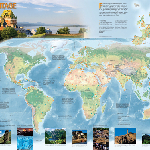
Editorial: Why the World Heritage Convention Makes Economic Sense

People value the cultural and natural heritage of mankind! Economists have even been able to put a monetary value on the importance we assign to that heritage. They measure how much people are willing to pay to travel to and stay at heritage sites. They measure how much property values are enhanced for property close to the sites. They measure how much people are willing to pay as entrance fees to enter the sites.

If you doubt that people are willing to pay for the preservation of cultural and natural heritage, think about the governments that spend taxpayers dollars on national parks, monuments, and cultural heritage sites! Consider also the donations that people make every year to the Sierra Club or World Wildlife.

Economists have even done surveys documenting that people value the knowledge that cultural and natural heritage is being preserved even in sites they will never themselves visit.

UNESCO's World Heritage Convention has more signatories than any other international treaty or convention. It gives UNESCO no legal authority to protect world heritage sites, nor to impose sanctions where sites are not being protected. It simply provides a mechanism by which sites nominated by the governments of the countries in which they exist can be subjected to impartial review and judgment. The World Heritage List is the best, most valid list of the wonders of the world. Incidentally, every site nomination is reviewed by one of three independent organizations:
Perhaps surprisingly, the competition for listing has encouraged countries to do extensive studies of sites, and to develop or revise plans to protect them. The review processes call world attention to sites in peril, and the threat of removing sites from the list seems to have real social and political impact!

Essentially, the World Heritage Convention is an agreement among the vast majority of the nations of the world that "if you will protect the world heritage sites in your country, I will protect those in mine". For fractions of a penny per person per year, the World Heritage Center provides a mechanism that enables the nations of the world to cooperate to protect and maintain the common heritage of mankind!


No wonder this program is the flagship program for UNESCO!
It deserves all our support.


Of course, one problem is that not everyone values our world heritage equally, and not everyone has the ability to pay for its preservation. The problem is especially severe in communities and countries that possesses world heritage sites but are too poor to conserve and protect them properly without outside help. UNESCO's World Heritage Fund has some resources to help such countries. Simply listing as a World Heritage site helps countries and communities to raise funds needed for protection of the site, especially encouraging national governments to provide support to local communities for the purpose.

The development of concepts of sustainable tourism and sustainable management of natural parks and nature reserves has helped in the recognition that poor local communities must be able to support themselves while they safeguard the sites in their neighborhood. Thus mechanisms for the creation of buffer zones with limited use, and the creation of jobs in conservation, protection and the tourism industry have been promoted. (Those of us who are fortunate enough to live in the greater Washington DC metropolitan area know just how valuable cultural tourism can be to a city!) Again, designation of a site as a World Heritage Site has real economic value to the community that protects that site.

Here are some resources to help understand the economists views on the economic valuation of world heritage:

UNESCO's Open Training Platform


UNESCO's Open Training platform makes available training and capacity-building resources developed by a variety of stakeholders worldwide. The objective of this platform is to provide trainers and learners with the learning resources they need, and a space where they can share and use material. Most of the training programs featured on the platform have open licenses, such as Creative Commons, which make them accessible to anyone to use for non-commercial purposes such as teaching and learning.

UNESCO's Open Training Platform


UNESCO's Open Training platform makes available training and capacity-building resources developed by a variety of stakeholders worldwide. The objective of this platform is to provide trainers and learners with the learning resources they need, and a space where they can share and use material. Most of the training programs featured on the platform have open licenses, such as Creative Commons, which make them accessible to anyone to use for non-commercial purposes such as teaching and learning.

Thursday, March 29, 2007

UNESCO launches culture diversity network

To counter the adverse affects of economic globalisation on world cultures and also foster cultural bond among Africans, the International Network for Cultural Diversity (INCD), recently announced the launch of INCD Africa. The institution is a network of artist organisations, culture producers, academics, heritage institutions and others from around Africa working together.

The launch of INCD Africa coincided with the entry into force of the new UNESCO’s Convention on the protection and promotion of the diversity of cultural expressions. The Convention was warmly welcomed by INCD, for it has been in the forefront of the campaign to build support for its development, ratification and effective implementation since its first meeting in 2000.

According to Ibrahima Seck, INCD Africa Coordinator based in Dakar, “Forming INCD Africa will give us a strong platform from which to do our work here in Africa, as well as ensuring that African perspectives and needs are integrated in the global movement.”

The INCD Africa urged governments to work with one another as well as with civil society, intergovernmental institutions and their own artists and cultural producers to achieve the real promise of the Convention.

Founded in 1998, INCD brings together more than 400 non-governmental cultural organizations in 74 countries. It has members in 23 African countries.

Source:

The Sun News Online

INCD Logo (image above)