Saturday, February 9, 2008

UNESCO and Knowledge Sharing

Four new publications from UNESCO:

* UNESCO and knowledge sharing
Publ: 2008; 2 p., illus.; BPI/EPP/2008/PI/60M/03.
For over 60 years, UNESCO has had a mandate to “maintain, increase and diffuse knowledge” (Constitution, Art 1. 2 (c)). In response to the challenges of globalisation and the Information Society, it advocates a vision of “Knowledge Societies”. But what do we mean by “knowledge” at UNESCO and what links are there between the Organization’s knowledge sharing programmes and its knowledge management (KM)?
* UNESCO and knowledge sharing (2): the capacity-building function
Publ: 2008; 2 p.; BPI/EPP/2008/PI/60M/04.
The first of this four-part series of meetings examines two case studies, from ED and CI Sectors, to explore key concepts and issues connected with capacity-building.
* UNESCO and knowledge sharing (3): the clearing house function
Publ: 2008; 2 p.; BPI/EPP/2008/PI/60M/05.
The second in this four-part series examines two case studies – one of the longest-standing and one of the newest knowledge sharing initiatives of the Organization – to explore key concepts and issues connected with UNESCO’s role as a clearing house
* ICT-Enabled Knowledge Acquisition
Publ: 2008; BPI/EPP/2008/PI/60M/02.
The Communication and Information Sector's work on ICT-enhanced knowledge acquisition is anchored within the "knowledge mandate" and Constitution of UNESCO. It seeks to develop an integrated work stream, inter-relating with other emphases and competencies within UNESCO. This capacity-building work focuses on four tracks: (1) content development, (2) communication infrastructure, (3) capacity-building and (4) innovative applications.

Bush Sends UNESCO Anti-Doping Treaty to Senate

Cycling News reports:
The United States took one step closer to signing a treaty intended to help fight doping in sport when President Bush asked the Senate to ratify the International Convention Against Doping in Sport on Thursday. The World Anti-doping Agency (WADA)-backed agreement, which was drawn up under the United Nations Educational, Scientific and Cultural Organization (UNESCO), has already been ratified by more than 70 other nations.

The UNESCO treaty formalizes global anti-doping rules under the WADA code, getting around issues which prevented some governments, such as the United States, from being legally bound by documents of non-governmental organizations such as WADA.
The White House statement noted that the treaty was in agreement with existing US laws and policies, but the aim was to "solidify our Nation's place as a leader in the worldwide effort to rid athletics of cheating through chemistry."
The administration's decision to move toward ratification of the International Convention Against Doping in Sport is receiving positive press attention worldwide..

Federico Mayor on the Culture of Peace

Federico Mayor was the previous Director General of UNESCO. He is now Co-chair of the UN Alliance of Civilizations High-level Group and President of the Culture of Peace Foundation. In this short video he talks about the culture of peace.

Friday, February 8, 2008

From Friends of World Heritage

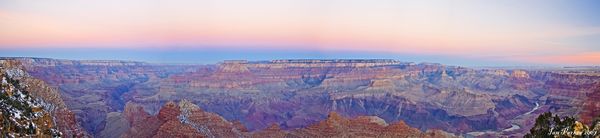
Grand Canyon : dawn panorama from Desert View
Photograph by Ian Parker

Places like Grand Canyon National Park and the Statue of Liberty in New York symbolize the best of U.S. natural beauty and history. But did you know these destinations are also UNESCO World Heritage sites?

Currently the United States has 20 World Heritage sites, and that list may grow. For the first time in over 25 years, the U.S. government is reviewing American places that may merit the international recognition that comes from being identified as a UNESCO World Heritage site.

Is the next U.S. World Heritage site near you?

Last fall, the U.S. National Park Service received dozens of nominations from both publicly and privately owned sites throughout the United States that were interested in being a part of the United States’ “Tentative List” of World Heritage sites. Of these nominations, 14 have been selected by the Secretary of Interior as potential candidates for the next U.S. World Heritage site.

To learn more about these places and how the tentative list works, visit our website to view an interactive map of these sites.

Stay tuned as the United States and other countries select their potential sites, we’ll bring you more about places and peoples contending for what is sometimes considered the Nobel Prize for world’s most important natural and cultural sites.

The Friends of World Heritage Team
http://www.friendsofworldheritage.com/

The New Edition of the UNESCO Courier is Out

More than half of the 7000 languages spoken in the world are in danger of disappearing. Yet, they are an essential part of people's identity. The United Nations has proclaimed 2008 the International Year of Languages. To find out more, read the February issue of the UNESCO Courier.

This year the UNESCO Courier is celebrating its 60th anniversary. It is now interactive! Send your comments and the Courier will publish them.

James Michael Kulikowski, Deputy Assistant Director-General for External Relations and Cooperation

Jim Kulikowski receives plaque fromMatthew Cooper
at meeting of the UK National Commission

Appointed Deputy Assistant Director General for External Relations and Cooperation in August 2005, Jim Kulikowski leads the UNESCO Division responsible for relations with Member States and for National Commissions as well.

Prior to joining UNESCO, he worked for the U.S. Government for some 21 years. Of those, the first 16 were with the Appropriations Committee in the U.S. House of Representatives, much of it dealing with the State Department and international organizations. Then, after joining the Senior Executive Service in 2000 as a senior career civil servant, he spent five years in Office of Management and Budget, again dealing with international affairs, and 6 months with the Office of Global Health Affairs in the Department of Health and Human Services.

In 2002, he was detailed to the Global Fund to Fight AIDS, Tuberculosis and Malaria in Geneva for four months during its startup phase, and then worked as part of the U.S. Delegation to the Global Fund in 2004 and 2005.

He also tried a couple of short stints as a lawyer in the private sector.

He has three degrees -- undergraduate, law and public health -- from Harvard University, and a diploma from the Phillips Exeter Academy.

Thursday, February 7, 2008

Americans for UNESCO News

1. Dr. Stephen Knapp, the new president of George Washington University has join the Americans for UNESCO Advisory Council. Also joining the Advisory Council are Dr. Martin C. Jischke, President Emeritus of Purdue University, and Dr. Sally Mason, President of the University of Iowa.
2. The U.S. National Commission for UNESCO announced that its 2008 Annual Meeting would take place on May 19-20 at Georgetown University. Andre Varchaver, the President of Americans for UNESCO is on the Planning Committee for the meeting.