Wednesday, April 16, 2008

Musings: The Importance of UNESCO

UNESCO is chartered with huge responsibilities, but shackled with a small budget -- on the order of US$300 million per year. The United Nations Educational, Scientific and Cultural Organization has lead responsibilities in the United Nations system for there areas, and also for communications and information.

Compare UNESCO's budget for its world wide responsibilities with some U.S. entities. My county's school system, for example, has an operating budget of some $2 billion per year plus an investment budget of some $230 million a year. The U.S. Federal Government spends $116 billion per year on research and development, and of course that is only part of what is spent on R&D in the country, and the expenditures on science include not only research and development but many other scientific functions as well. The global market value of cultural and creative industries (producing and distributing such goods and services such as books, CDs, videogames and sculptures) has been estimated at US$ 1.3 trillion and is rapidly expanding; between 1994 and 2002, international trade in cultural goods increased from US$38 billion to US$60 billion. The United States -- with a population of over 400 million, and per capita GDP of $43,500 -- spent 8.8 percent of GDP on information and communications technology in 2005.
As the above graph shows, the number of intergovernmental organizations exploded in the last half of the 20th century. UNESCO is now one of thousands of such organizations. We tend to lose track of the work and impacts of individual intergovernmental organizations in the mass of such organizations. So too, we tend to assume that these organizations with relatively small budgets also have relatively limited impact.

In the case of UNESCO, I would suggest that the impact has been quite significant:

Education
The community of nations has embarked on an ambitious program to provide Education for All, and includes ambitious educational goals within the Millennium Development Goals. UNESCO's function over the years has been to keep international attention on education, and on the need to work to assure people's human rights to education. In the current situation, it has worked to help assure that educational statistics are comparable among countries, and provides forums where national governments have to defend their educational performance before both their own citizens and other nations. It is likely that global educational achievements are much greater than they would be had there not been a United Nations body to do that which UNESCO does in education.
Science
In its early years, UNESCO's influence was critically important in the creation of the International Center for Theoretical Physics and the European Center for Nuclear Research (CERN); these organizations have helped both to illuminate the nature of the universe and to spread modern physics worldwide. The role of CERN in the creation of the World Wide Web might alone justify UNESCO's existence.

The role of UNESCO's Intergovernmental Science Committees has been quite important. In oceanography, UNESCO has helped the scientific community to work in ways transcending national borders, and is working to develop tsunami warning systems to serve all of the world at risk from tsunami disasters. The hydrology program is allowing collaborative work to characterize water resources, and helping to create a knowledge base that can be trusted in negotiation on control and allocation of water resources. The Man in the Biosphere program has resulted in a collaborative structure of hundreds of bioreserves, where mankind is learning how to protect the biospere.
Culture
UNESCO's World Heritage Center has recognized more than 800 natural and cultural sites that are so important that they can be fairly called the heritage of all mankind. For each, the country in which the site is located has produced a detailed study of the site and a plan for its protection. Monitoring of the state of those sites encourages countries to work hard to achieve that protection, and over the history of the program only one country has withdrawn a single site from the network.

UNESCO has also catalized the creation of a body of international conventions that protect cultural property. Since the protection of Abu Simbelm UNESCO has provided a system that helps to protect cultural heritage during emergencies and wars, and helps to regulate international trade to prevent the trade in stolen artifacts and other cultural property.
Communications
UNESCO provides a mechanism for the United Nations to militate for freedom of expression and freedom of the press. Every time a reporter is killed or imprisoned anywhere in the world, UNESCO protests and in so doing draws public attention to the event.

UNESCO also serves the United Nations system to promote libraries, to support a culture of the book, and more recently to promote the development of digital information serving the countries on the wrong side of the digital divide.
Why is UNESCO Important to the United States?
The points above are made to illustrate that UNESCO is important to the community of nations. To our State Department, which concerns itself primarily with security and economic issues, those services may not be convincing. Of course, U.S. foreign policy is also concerned with supporting the international humanitarian programs desired by the American public, and UNESCO's programs in Africa are prototypical of the multilateral approach to development assistance.

UNESCO was created to promote the international cooperation of national intellectual communities -- educatoral, scientistific and cultural. Indeed these communities in the United States value the contacts with their peers abroad, and expect the foreign policy apparatus of government to facilitate that networking. UNESCO is, in realizing these aspirations, an important element of foreign policy.

The State Department is increasingly recognizing the importance of "soft diplomacy" as a necessary complement to the "hard diplomacy" focusing on economic and military power. The United States needs to restore the confidence of other nations that this country will negotiate in good faith, with understanding and respect for the positions of others, and UNESCO provides a useful forum for that purpose.

As Archibald McLeish, the writer and Librarian of Congress, so memorably said in the negotiations leading up to the creation of UNESCO, "Since wars begin in the minds of men, it is in the minds of men that we must begin to build the defenses of peace." Building those defenses is a long term process, and it is one best accomplished by the community of nations working together. Thus UNESCO, with its work with education and with the intellectual communities of the nations of the world, should be a significant element in U.S. soft diplomacy.

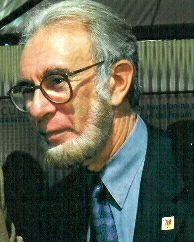
Tuesday, April 15, 2008

Musing About the Future of UNESCO

Last night we held a panel discussion in our graduate class on UNESCO. The class focused on UNESCO's future in the 21st century. The discussion focused on how UNESCO could adapt to the changes that will surely occur over the next 40 years or so.

Coincidentally, I have been reading Good Capitalism, Bad Capitalism, and the Economics of Growth and Prosperity by William J. Baumol, Robert E. Litan, Carl J. Schramm. The authors focus on innovation as the basis of economic success of nations. For advanced developed nations, working at the forefront of technology and having relatively high costs of labor, companies must invent, not only innovate by copying. The authors also realize that most invention comes from individual entrepreneurs and small firms. However, they note that it is large firms that have the resources to take an invention and develop it into a widely used, high quality, reliable product. Successful large firms not only continue to innovate by acquiring and building on ideas from outside (and occasionally inventing from within(, they also get rid of activities by decentralizing management, selling off divisions, or closing down things which are no longer profitable.

Perhaps UNESCO, with its 2000 people can take the successful commercial firm of a comparable size and learn from their approach. It seems clear that would be better served by a sharper focus. Many of its most successful programs have their own oversight bodies and receive most of their financing from other sources, not UNESCO. Perhaps a process of formally either turning activities into independent agencies, or of decentralizing by delegation of full authority to the staff and directors of some of these activities might help. This sounds easy, but in fact is very difficult. The management of the reengineering and restructuring of relations in downsizing processes requires great leadership if it is to be done well.

UNESCO often finds innovations thrust upon them -- new standards setting documents, new centers, new programs. Some of the best programs were started in this way. Russel Train was the motive force behind the invention of the World Heritage program, which the secretariat carried to success, as Roger Revell and a few other scientists were the originators of the Intergovernmental Oceanographic Committee, which UNESCO also made a success. Indeed, even in the cases of Education for All and the Millennium Development Goals, UNESCO took on tasks developed outside and ran with them. Again, the management of innovation in a large, complex organization is also very demanding of skills and time.

UNESCO needs very good management to select among all the innovations suggested each year those which are really practical and important, those which fit with UNESCO's mandate and capabilities, and those which UNESCO can do well. It also needs good management to decide which of its current activities not to do, and to make the best, most appropriate arrangements for their termination or decentralization.

John Daly

Sunday, April 13, 2008

UNESCO Destroys 100,000: Director General Launches Investigation

Molly Moore and John Ward Anderson write in The Washington Post (April 13, 2008):
For more than two decades, 250 historians and specialists labored to produce the first six volumes of the General History of Latin America, an exhaustive work financed by UNESCO, the United Nations organization created to preserve global culture and heritage.

Then, over the course of two years, UNESCO paid to destroy many of those books and nearly 100,000 others by turning them to pulp, according to an external audit.

"This is the intellectual organization of the United Nations system," Aziza Bennani, Morocco's ambassador to UNESCO, said in an interview. "How could an employee of UNESCO make a decision to destroy these books?"

Homero Aridjis, Mexico's ambassador, said at the organization's executive council meeting this week, "This is not only a blow to the culture and knowledge of entire populations and nations, it contradicts the mandate entrusted to UNESCO." He demanded an internal investigation.

UNESCO Director General Koichiro Matsuura said it was "completely incomprehensible and inappropriate" that some of the organization's "most important and successful collections" were ordered destroyed, including histories of humanity and Africa, and surveys of ancient monuments.
The article also states:
According to the report, the destruction occurred in 2004 and 2005, when UNESCO's overflowing book storage warehouses in Paris were relocated to Brussels. Rather than pay to move 94,500 books, auditors reported, UNESCO officials ordered them destroyed. The books were turned to pulp for recycling, the audit says.

Nino Muñoz Gomez, director of UNESCO's Bureau of Public Information and chief of the publishing division, said that at least half of the destroyed volumes were outdated and contained obsolete statistical data.

The audit notes that some publications were out of date but says others "on historical or purely literary themes (poetry anthologies, stories from all lands in translation) were not at all affected by obsolescence." It says a "solution other than destruction" should have been considered, "such as free distribution to libraries.".....

Because too many books often were ordered and others were never distributed properly, tens of thousands piled up in UNESCO's storage facilities at a cost of about $100,000 a year, until the agency decided to shift distribution functions to a Brussels company and move its stocks there.

Muñoz Gomez, who assumed his post in April 2005 and was chief of the publishing section for nine months while the book destruction was taking place, said he did not learn of it until early 2006, when a new employee showed him thousands of dollars in bills for the pulping.

He said he authorized payment of those bills "of several thousand euros each" but did not realize the magnitude of the operation. "All we knew is the bills were sent by the company and we had to pay the bills," he said in an interview.


Friday, April 11, 2008

Telephone Conference of the U.S. National Commission For UNESCO

The U.S. National Commission for UNESCO will meet by conference call on Wednesday, April 23, at 11a.m. The meeting of this advisory committee will last until approximately 12:00 p.m., and the call is open to the public.

The U.S. National Commission for UNESCO was asked to provide recommendations on a proposal received to establish a UNESCO Chair. For more information about the Program see http://www.state.gov/p/io/unesco/c14222.htm. The call will also be an opportunity to provide an update on recent and upcoming UNESCO and U.S. National Commission for UNESCO activities.

For more information on this conference call, or to participate in it, please contact the Executive Secretariat of the National Commission at 202-663-0026.

Wednesday, April 9, 2008

David Adams Website: Global Movement Towards a Culture of Peace


David Adams until his retirement from UNESCO in 2001 was responsible for UNESCO's commemoration of the International Year of the Culture of Peace and was the architect of many of the Culture of Peace programs. Following a career as Professor of Psychology for 23 years at Wesleyan University, he had come to UNESCO in 1992 to develop the Culture of Peace Program.

He currently maintains a website in support of the development of a global culture of peace.

Editorial: The United States Positions At UNESCO

What should be the United States position with respect to UNESCO as we enter the 21st Century?

UNESCO seeks to build the defenses of peace in the minds of men. It seeks to promote international cooperation among the intellectual communities of its member states, It is the lead agency for the United Nations in education, science, culture and communications. It describes itself as a laboratory of ideas, as a standard setter, as a clearing house, as a builder of capacity in Member States and as a catalyst for international cooperation.

The United States cooperated in the creation of UNESCO, with post World War II leaders seeing it as important to a variety of U.S. foreign policy interests. It withdrew from UNESCO in 1984 when -- due to UNESCO's bureaucratic inefficiencies and to some areas in which the majority of governments opposed the positions of the United States -- a later administration concluded that UNESCO no longer was a cost-effective vehicle for achieving U.S. foreign policy objectives. In 2002, following improvements in the operations and efficiency of UNESCO and changes in aspects of UNESCO's policies and programs, the United States government decided to rejoin the Organization.

U.S. Foreign Policy Objectives

The dominant foreign policy objectives of the United States are assuring the security and economic health of the nation. Humanitarian concerns are also important, realized through provision of relief to the victims of disaster and provision of foreign assistance for the alleviation of poverty. There are increasing concerns for global problems, such as protecting the health of the nation from global epidemics, protection of the global environment, and protection of World Heritage from the threats that arise from globalization.

The State Department has also maintained a program of cultural diplomacy, which has been under-appreciated. Cultural diplomacy has the potential to help bridge the cultural divides between the people of the United States and the peoples of other nations, tand indeed to prepare U.S. government officials to deal with people from other cultures.

It is also important that the U.S. builds support for and reduces resistance to its own diplomatic priorities. Importantly, diplomats engage in give and take in international fora, supporting the priorities of other nations and building alliances.

UNESCO's Potential Importance to U.S. Diplomacy

UNESCO's efforts to promote peace through appropriate education programs, and its ability to promote better understanding among people of different cultures are increasingly important to U.S. security, as indeed is UNESCO's ability as a neutral party to allow the global scientific community to reach consensus on issues such as the location and availability of water resources or the appropriate management of ocean resources.

UNESCO's leadership of the global Education for All program, its intergovernmental scientific programs, its World Heritage program, and its network of conventions governing cultural property are additional examples of highly cost- effective vehicles for the United States by which UNESCO is achieving objectives of U.S. foreign policy as well as objectives of many other member states.

UNESCO can serve as a neutral venue for discussions between the United States and other nations. In some cases those discussions are important in themselves and in others they are important in building confidence for later negotiations. Similarly, it serves as a venue in which other countries can meet, advancing peace processes and cultural understanding in ways that are indirectly important to the United States.

UNESCO offers a vehicle to help network U.S. educations, scientists and cultural leaders with their counterparts in other nations. Such networking is important in achieving a number of foreign policy objectives, and indeed is so valued by the U.S. communities involved that it is itself an increasingly important objective in terms of service to the public.

Priorities

As a result of the 18 year absence of the United States from UNESCO membership, the immediate concern is to reestablish U.S. influence in the governance of UNESCO while seeking changes in policy and programs that further advance U.S. foreign polity interests.

Another immediate priority is reacquainting the U.S. communities with UNESCO, and increasing the involvement of leaders of those communities in the work of UNESCO. In this respect, the U.S. National Commission could again be an important instrument as it was in the distant past.

Of course, the United States is interested in UNESCO's ability to work effectively and efficiently. UNESCO will not be an useful vehicle for achieving U.S. foreign policy objectives if it is allowed to be ineffective or inefficient in carrying out its constitutionally assigned mission. Thus the U.S. should use its influence in the governing bodies of UNESCO to assure it is well led and efficiently run.

UNESCO's most important objectives have not been met in six decades of its existence, and will not be quickly met in the future. Every U.S. administration seeks to have results to show in four or eight years. The U.S. should be willing, given the modest size of the UNESCO budget, to give priority to those long term efforts likely to contribute most to peace and prosperity in a livable environment.

Perhaps the most important priority might be to fully incorporate UNESCO as an instrument of U.S. cultural diplomacy, encouraging the organization to promote cultural development in its member states. UNESCO quite properly follows the mandate of its member states to protect and promote cultural diversity. Globalization often results in pressures driving cultural changes which are unpleasant to the members of the changing cultures and indeed sometimes immoral or unethical to the majority of the people.

This is not to say that cultural change itself is unacceptable, but rather that the directions and processes of cultural change must be more acceptable. While the world's cultures are hugely diverse, there is wide agreement among nations on universal rights of man. Consequently, there is likely to be wide agreement that cultural changes are acceptable when they help to assure that people within a culture can more fully achieve those rights. Indeed, it is clear that cultural development is important for achieving peace, for assuring that peoples rights to a decent life, and indeed for assuring freedom of expression and freedom from coercion.

Thus U.S. cultural diplomacy should seek to encourage UNESCO to promote processes which engage the members of the cultures of the world to embrace those changes which will help them to more fully achieve the rights of their members which all nations have agreed to be universal rights.

John Daly
The ideas expressed in this posting are those of the author alone, and do not necessarily represent those of Americans for UNESCO or any other organization.

Sunday, April 6, 2008

Editorial: UNESCO Needs to be Reinvented for the 21st Century

UNESCO still reflects the management systems of the time it was created in the aftermath of World War II. It is time to reorganize UNESCO, taking into account the advances in organizational design made possible by the Information Revolution, and prepare UNESCO for the challenges of the 21st Century.

UNESCO should focus on International Networks. It should decentralize, outsource back office functions, conduct much more of its activity via the Internet, focus far more on its core functions, and spin off functions that distract it governors and leaders from those core functions.

Why UNESCO Is the Way It Is

When UNESCO was founded, transportation was far less developed than it is today; there was no commercial jet air travel, and the international air travel system was rudimentary. People in developed nations listened to the radio, but the transistor radio had not yet been invented and much of the world was even out of radio broadcast range. Television was an invention waiting for a market. Making an international phone call was a lengthly and expensive undertaking. The intellectual communities that UNESCO was designed to serve were concentrated in a couple of score of rich countries, and got their information from print media.

There were few intergovernmental organizations in existence before the 1940s, and thus few models that UNESCO could copy. The most applicable was probably the International Institute for Intellectual Cooperation with its 40 national committees, and the founders of UNESCO did indeed draw heavily on that experience. However, at that time the dominant organizational form used by government and corporations was hierarchical with a central headquarters and dependent field offices. There were few international corporations in today's sense of that term, and even fewer that emphasized knowledge services.

Not surprisingly then, UNESCO was created with a highly centralized bureaucracy (in Paris), and depended heavily on publication in the print media for its information products. Its founders rejected a French proposal that the national delegations to UNESCO be tripartite, with representatives of the National Commissions and Civil Society as well as government; government was given full control. National Commissions were, however, included in the UNESCO constitution both to advise their governments and to serve as channels of communication between UNESCO and the educational, scientific and cultural communities within the member states.

With decolonization and the epoch of development assistance, UNESCO had to reorganize to some degree in order to carry out its development assistance mission. Similarly, as the network of intergovernmental organizations exploded to include thousands of such organizations, and as governments became more familiar with the concepts of intergovernmental organizations and organized to deal with them on a regular basis, many of the successful UNESCO programs were restructured to have governance shared between UNESCO and their own intergovernmental governance committees. Similarly, many decentralized centers and Institutes came into being, and many have governance structures that respond to UNESCO and to their external donors.

21st Century Management

The Information Revolution has led to major changes in management theory. The hierarchical organization of the 20th century was an effective way to manage national systems that were created to achieve economies of scale in production of goods and services and to distribute products via the elaborating transportation infrastructure to national markets. Companies grew by vertical integration of productive and distribution activities, and later by aggregation of different enterprises into conglomerates. Since intra-organizational information systems were at the time more efficient in coordinating the disparate operations of production and distribution than were markets, large organizations were created.

In the 21st century, e-commerce has come to demonstrate that market processes can be more efficient that intra-organizational ones. Business to business e-commerce is growing, and corporations are focusing more on core competencies, buying the inputs needed for those competencies in one set of markets, and selling their products in another set of markets. Indeed, back office functions, once thought to be core functions of any organization, are not only being outsourced, but are being outsourced from developed to developing countries to achieve economic efficiencies. Similarly, we find government to business e-institutions being developed as well as business to customer e-commerce thriving in businesses such as eBay, Amazon, and Dell. e-government is increasingly improving the efficiency and effectiveness of government to citizen transactions.

Mass communication has developed greatly in the later part of the 20th century, so that most people obtain more information from electronic than from print media. Moreover, the Internet has resulted in point to point communication being as cheap as mass media communication. The World Wide Web is a far more efficient way for UNESCO to interact with the global community that are paper books and periodicals. Indeed, with the development of community radio and satellite communications, it is possible to reach many of even the most isolated communities with up-to-the-minute information.

While it is far more feasible for people to travel to and from Paris than in the past, video conferencing is an increasingly useful approach to face-to-face communications among people who live in widely separated places; video and audio streaming via the Internet can make the proceedings of such conferences cheaply available to a global audience, with each member tuning in from his or her home or office at a time he or she finds most convenient. Thus Internet mediated dialog is likely to increasingly substitute and complement in-person meetings.

Wikipedia and the Encyclopedia of Life illustrate that new Internet based technologies can substitute for earlier management-intensive approaches to the development of bodies of reliable information, and moreover can result in those bodies of information being more current than would be possible with traditional approaches.

Social networking, which probably began with the scientific community in the United States via email and inter-networking, and expanded to include online depositories of scientific papers, has exploded with the growth of Facebook, Linkedin, and other social networking platforms. Today the scientific community continues to gather at large scientific meetings and to disseminate information through peer-reviewed paper journals, but a far richer and more timely networking is taking place over the Internet.

Implications for UNESCO

Studies of governmental organizations that have successfully embarked on e-government efforts have suggested that the process goes through several stages, each of which subsumes and builds upon the previous stages:
  1. The establishment of a presence on the Internet.
  2. The provision of information via the Internet.
  3. The conduct of transactions via the Internet.
  4. The ultimate restructuring and reorganization of functions and processes to utilize the Internet.
UNESCO has already accomplished stages one and two, and is conducting some transactions via the Internet. It is now time for the organization to undertake the completion of the process of restructuring and reorganizing to fully utilize the potential provided in the new Global Information Infrastructure. It should revamp its publication policies, reinvent its websites, and build a global information network to be far more effective in the provision of information to the global community. It not only should be far more proactive in moving its transactions to the Global Information Infrastructure, but it should also find ways to dis-intermediate the international communications among the national intellectual communities that it serves.

Most importantly, it should begin to undertake the re-engineering of its structure and processes, and the restructuring of the institutions that form its interface with the governments of its member states, with civil society organizations, and with the global and national intellectual communities it was born to serve.

John Daly
The opinions expressed in this posting are those of the author alone, and do not necessarily reflect those of Americans for UNESCO or any other organization.