Tuesday, July 22, 2008

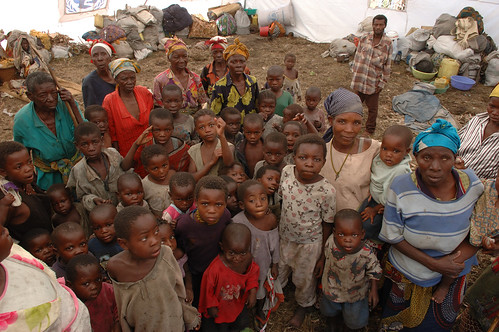
The Right of the Child to Education in Emergency Situations


During the 49th Session of the Committee on the Rights of the Child, the 19 September 2008 will be devoted to discussion of the right of children to education in emergency situations.

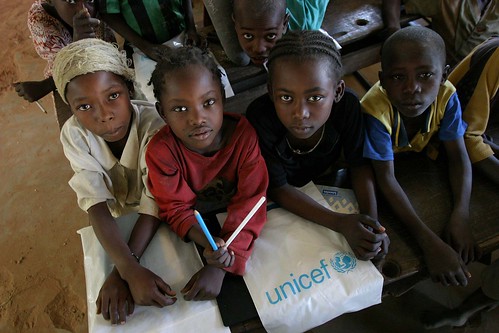
Wars and natural disasters deny children opportunities for education, yet in these situations educational services can not only ameliorate the problems faced by children but indeed be lifesaving. Yet education is often not a priority in humanitarian assistance and funding shortfalls frequently exacerbate the emergency educator's problem.
Emergency education should not be seen as a relief exercise, like handing out cooking pots and blankets, but as a vital dimension of national reconstruction.
The Inter-Agency Network for Education in Emergencies (INEE) is a global, open network of non-governmental organizations, UN agencies, donors, practitioners, researchers and individuals from affected populations working together within a humanitarian and development framework to ensure the right to education in emergencies and post-crisis reconstruction. It was founded in 2000.

As the United States seeks solutions to the conflicts in Iraq, Afghanistan and other regions, the INEE Peace Education Program is especially important to our policy.
The term peace education can cover many areas, from advocacy to law reform, from basic education to social justice. This peace education programme is designed to develop people's constructive and peaceful skills, values and behaviours. Ideally this complements and supplements the process of peace building, whereby communities and nations develop social and economic justice (and legal reform where necessary).
Monday, July 21, 2008

WADA-UNESCO Cooperation on Anti-Doping

The World Anti-Doping Agency (WADA) was created under the auspices of the International Olympic Committee to promote and coordinate the fight against doping in sport internationally. However, prior to 2005 many governments could not be legally bound by a non-governmental document such as the World Anti-Doping Code, the document harmonizing regulations regarding anti-doping in all sports and all countries of the world. Governments accordingly drafted the International Convention under the auspices of UNESCO, enabling them to align their domestic legislation with the Code and thereby harmonizing the sport and public legislation in the fight against doping in sport.

Some 192 countries have signed the Copenhagen Declaration on Anti-Doping in Sport, the political document through which governments show their intention to implement the World Anti-Doping Code through ratification of the UNESCO Convention. More than 570 sports organizations have already adopted the Code.

Saturday, July 19, 2008

UNESCO’s Work on Education for Peace and Non-Violence

The brochure titled

“UNESCO’s Work on Education for Peace and Non-Violence: Building Peace through Education”

provides an overview of UNESCO’s work in advocacy, policy, information exchange and the development of text books, learning materials and curricula.

It also provides resources on UNESCO's programs and publications on peace education and conflict resolution.

Contact: rve@unesco.org

Related links

Thursday, July 17, 2008

UNESCO's Open Training Platform

Open Training Platform

The Open Training Platform (OTP) is a UNESCO-powered hub providing free and open learning for development. It is a Flagship Partnership Initiative of the United Nations Global Alliance for ICT and Development (GAID).

At present, OTP regroups partners from all UN agencies (FAO, ILO/ITC, ITU, UNESCO, UNITAR, UNU, UNV, WHO and UNEP), worldwide development practitioners and agencies, as well as regional and local NGOs and CBOs.

This 15-month old web portal keeps on growing: it has been visited 80 000 times since its creation, counts now over 2400 learning resources shared by 1700 members from 770 development stakeholders worldwide.

Telecentre.org, the other Flagship Partnership Initiative of GAID, has just joined OTP.

Wednesday, July 16, 2008

Some Current Job Openings at UNESCO

# DIRECTOR, Division for Education Strategies and Capacity Building (Education Sector)
ED 522 - (D1) Paris, France Read more!

# DEPUTY DIRECTOR, International Institute for Educational Planning (IIEP)
IEP 878 - (D1) Paris, France Read more!

# DEPUTY DIRECTOR FOR PROGRAM (Bureau of Field Coordination)
LA/RP/BRA/BFC/0010 - (D1) Brasilia, Brazil Read more!

Check out:
Editors note: I strongly advise Americans applying for jobs at UNESCO to contact the State Department and inform employees dealing with UNESCO of your application. JAD

International Convention against Doping in Sport

With the Tour de France in operation, and the Olympic Games about to start, there should be a considerable interest in the International Convention Against Doping in Sport. The convention, drafted under the auspices of the UNESCO with significant U.S. Government involvement and support, is intended to harmonize and coordinate the activities of governments in combating doping in sport. The convention addresses a variety of areas that are essential in promoting anti-doping controls, such as scientific and medical research, prevention and education activities, and regulations involving doping substances and methods. It already has been ratified by more than 80 countries and entered into force for the signatories on February 1, 2007.

According to the State Department, the Convention was forwarded to the U.S. Congress for ratification in February. In late June the Senate Foreign Relations Committee unanimously advanced the treaty for a final vote on the floor of the Senate. According to cott Burns, deputy director of the Office of National Drug Control Policy, the U.S. is already in compliance with the convention and no new laws, policies or financial obligations would be required for its ratification.

According to the Associate Press:
Ratification is considered a boost for any country hoping to host the Olympics. The United States is the only country among the seven bidding for the 2016 Games that hasn't put the treaty into law. The host city will be chosen in October 2009.

Annual Meeting of the U.S. National Commission for UNESCO

Ambassador Louise Oliver addresses
guests during the opening reception,
held at Blair House

The Permanent Delegation of the United States to UNESCO has published a brief article on the NatCom annual meeting on its website. The note suggests that 100 Commissioners attended, where by my count less than half actually showed up. The note is more informative about the side events that accompanied the meeting of the Natcom than about the substantive content of the meeting itself.

Ambassador Louise Oliver Remarks at U.S. National Commission Meeting