Saturday, August 19, 2006

UNESCO's Actions Against Slavery

In observance of the 50th week (08/21-08/27) of UNESCO’s 60th anniversary celebrations, we have selected for you a set of links and events dedicated to the Struggle Against Slavery.

In order to encourage reflection, scientific and historical research and the dissemination of information on slavery and its consequences, UNESCO’s Culture and Education Sectors develop new initiatives to combat the lingering consequences of the slave trade and slavery such as discrimination and racism.

In 1993, UNESCO approved the implementation of the "Slave Route" Project before moving on with the publication of "From Chains to Bonds: the Slave Trade Revisited" (1998). The idea of a "Route" expresses the dynamics of the movement of peoples, civilizations and cultures, while that of "slave" addresses not only the universal phenomenon of slavery, but also in a more precise and explicit way the transatlantic slave trade in the Atlantic, and slave trade the Indian Ocean and the Mediterranean. >> More

The transatlantic slave trade is often regarded as the first system of globalization. Millions of Africans were torn from their homes, deported to the American continent and sold as slaves. Two outstanding decrees for abolition were produced during the nineteenth century: the Abolition Bill passed by the British Parliament in August 1833 and the French decree signed by the Provisional Government in April 1848. In the United States, Abraham Lincoln extended the abolition of slavery to the whole Union in the wake of the Civil War in 1865. The abolition of slavery became the 13th Amendment to the Constitution of the United States.

Yet, despite the abolition of slavery, modern forms of slavery persist . In the context of the "Project to Fight Human Trafficking in Africa", UNESCO aims to promote effective and culturally appropriate policy-making to combat the trafficking of women and children in Africa. Today various international conventions define slavery and human trafficking as a "crime against humanity" punishable by international law. See legal instruments.

Events
*
23 August: International Day for the Remembrance of the Slave Trade and its Abolition. The night of 22 to 23 August 1791 marks a crucial date in the abolition of the transatlantic slave trade. The Director-General of UNESCO invites the Ministers of Culture of all Member States to organize events every year on that date, involving the entire population of their country and in particular young people, educators, artists and intellectuals. >> More

*
19-22 September, 2006: 50th Anniversary of the 1st International Congress of Black Writers and Artists. Nobel Prize Laureate Wole Soyinka, a Goodwill Ambassador to UNESCO, President of the African Community of Culture and the W.E.B. Du Bois Institute for African and African American Research at Harvard University will celebrate the event at the Sorbonne University and the UNESCO Headquarters in Paris. UNESCO is officially bringing its technical and financial support for this event mainly through the Division of Cultural Policies and Intercultural Dialogue and the Africa Department. >> More

* UNESCO, in collaboration with the Schomburg Center for Research on Black Culture (New York), has set up the Traveling Exhibition "Lest We Forget: Triumph over Slavery".This exhibition focuses on the centrality of the slave trade in the making of the modern world.

Read more
* UNESCO Programmes around this project
* History of the Slave Trade
* The 2006 Slave Route Project Brochure

*
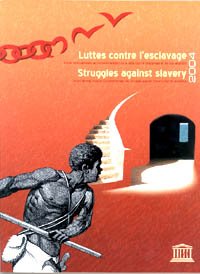
The Struggle Against Slavery Brochure

UNESCO's Actions Against Slavery

In observance of the 50th week (08/21-08/27) of UNESCO’s 60th anniversary celebrations, we have selected for you a set of links and events dedicated to the Struggle Against Slavery.

In order to encourage reflection, scientific and historical research and the dissemination of information on slavery and its consequences, UNESCO’s Culture and Education Sectors develop new initiatives to combat the lingering consequences of the slave trade and slavery such as discrimination and racism.

In 1993, UNESCO approved the implementation of the "Slave Route" Project before moving on with the publication of "From Chains to Bonds: the Slave Trade Revisited" (1998). The idea of a "Route" expresses the dynamics of the movement of peoples, civilizations and cultures, while that of "slave" addresses not only the universal phenomenon of slavery, but also in a more precise and explicit way the transatlantic slave trade in the Atlantic, and slave trade the Indian Ocean and the Mediterranean. >> More

The transatlantic slave trade is often regarded as the first system of globalization. Millions of Africans were torn from their homes, deported to the American continent and sold as slaves. Two outstanding decrees for abolition were produced during the nineteenth century: the Abolition Bill passed by the British Parliament in August 1833 and the French decree signed by the Provisional Government in April 1848. In the United States, Abraham Lincoln extended the abolition of slavery to the whole Union in the wake of the Civil War in 1865. The abolition of slavery became the 13th Amendment to the Constitution of the United States.

Yet, despite the abolition of slavery, modern forms of slavery persist . In the context of the "Project to Fight Human Trafficking in Africa", UNESCO aims to promote effective and culturally appropriate policy-making to combat the trafficking of women and children in Africa. Today various international conventions define slavery and human trafficking as a "crime against humanity" punishable by international law. See legal instruments.

Events
*
23 August: International Day for the Remembrance of the Slave Trade and its Abolition. The night of 22 to 23 August 1791 marks a crucial date in the abolition of the transatlantic slave trade. The Director-General of UNESCO invites the Ministers of Culture of all Member States to organize events every year on that date, involving the entire population of their country and in particular young people, educators, artists and intellectuals. >> More

*
19-22 September, 2006: 50th Anniversary of the 1st International Congress of Black Writers and Artists. Nobel Prize Laureate Wole Soyinka, a Goodwill Ambassador to UNESCO, President of the African Community of Culture and the W.E.B. Du Bois Institute for African and African American Research at Harvard University will celebrate the event at the Sorbonne University and the UNESCO Headquarters in Paris. UNESCO is officially bringing its technical and financial support for this event mainly through the Division of Cultural Policies and Intercultural Dialogue and the Africa Department. >> More

* UNESCO, in collaboration with the Schomburg Center for Research on Black Culture (New York), has set up the Traveling Exhibition "Lest We Forget: Triumph over Slavery".This exhibition focuses on the centrality of the slave trade in the making of the modern world.

Read more
* UNESCO Programmes around this project
* History of the Slave Trade
* The 2006 Slave Route Project Brochure

*
The Struggle Against Slavery Brochure

UNESCO Acting With and For Youth -- More information

In a belated bow to the United Nations' International Youth Day and UNESCO's week long celebration of its six decades of service to youth, we have added a Youth page to the Americans for UNESCO website.

In addition, here are some Youth oriented events, activities, and links:
· August 14-16, 2006 - XVI International AIDS Conference – Toronto, Canada. The Chasing the Dream online photo exhibit. This exhibit portrays the intersection of eight young people with Millennium Development Goals and will be on display at the XVI International AIDS Conference in Toronto, 14-16 August 2006. Link to: What Works in HIV Prevention: Engaging Young People

· Deadline: September 8th, 2006: UNICEF Voices of Youth Photo contest: Inspirational Women.

· May 1st-October 1st, 2006 2006 UNICEF/OneWorld Radio Prize contest. The theme for the 2006 contest is UNITE FOR CHILDREN. UNITE AGAINST AIDS. Entries should be about HIV and AIDS – prevention, education, the scope of the pandemic and youth action to address it. More Information on rules, regulations and entry forms

· 2007 G8 Youth Event in Germany

· September 2006- February 2007: Participate in a Kairos Future delfi survey on youth values and lifestyle! For more information, please visit

· Become a Youth Delegate to The United Nations

· More UN Youth Events

More on the UN and Youth:

· Download The MDGs Youth Action Guide on the Millennium Campaign Website

· UN Volunteers and the Millennium Development Goals.

UNESCO Acting With and For Youth -- More information

In a belated bow to the United Nations' International Youth Day and UNESCO's week long celebration of its six decades of service to youth, we have added a Youth page to the Americans for UNESCO website.

In addition, here are some Youth oriented events, activities, and links:
· August 14-16, 2006 - XVI International AIDS Conference – Toronto, Canada. The Chasing the Dream online photo exhibit. This exhibit portrays the intersection of eight young people with Millennium Development Goals and will be on display at the XVI International AIDS Conference in Toronto, 14-16 August 2006. Link to: What Works in HIV Prevention: Engaging Young People

· Deadline: September 8th, 2006: UNICEF Voices of Youth Photo contest: Inspirational Women.

· May 1st-October 1st, 2006 2006 UNICEF/OneWorld Radio Prize contest. The theme for the 2006 contest is UNITE FOR CHILDREN. UNITE AGAINST AIDS. Entries should be about HIV and AIDS – prevention, education, the scope of the pandemic and youth action to address it. More Information on rules, regulations and entry forms

· 2007 G8 Youth Event in Germany

· September 2006- February 2007: Participate in a Kairos Future delfi survey on youth values and lifestyle! For more information, please visit

· Become a Youth Delegate to The United Nations

· More UN Youth Events

More on the UN and Youth:

· Download The MDGs Youth Action Guide on the Millennium Campaign Website

· UN Volunteers and the Millennium Development Goals.

Friday, August 18, 2006

UNESCO supports Libraries

UNESCO supports and promotes universal access to information and knowledge flows. Part of its many activities focuses on the strengthening of the institutional capacity of libraries as gateways to information. As such, UNESCO assists worldwide libraries to acquire new technologies and network resources through the UNESCO Network of Associated Libraries (UNAL). UNAL’s main objective is to encourage libraries that are open to the public to undertake activities in UNESCO’s fields such as the promotion of human rights and peace, cultural dialogue, protection of the environment, fight against illiteracy, etc. Over 500 libraries around the world are members of the Network, the Library of Congress being one of them.

UNESCO Libraries Portal currently contains over 14000 links to websites of libraries around the world, as well as to resources related to training, preservation and international co-operation in this area. A major part of this heritage is stored in libraries. The world’s documentary heritage constitutes a major part of mankind’s memory and reflects the diversity of peoples, languages and cultures. Through the Memory of the World Programme and other initiatives, UNESCO has played a leading role in preserving information and communication contents and in optimizing access to them. In particular, UNESCO encouraged the elaboration of strategies to facilitate the digitization of librarian collections; it also promoted and disseminated the International Charter for the Preservation of Digital Heritage adopted in October 2003.

From August 20th-24th, 2006, UNESCO will participate in the round-table on "Libraries: Dynamic Engines for the Knowledge and Information Society" organized by the International Federation of Library Associations and Institutions (IFLA) during its 72nd IFLA General Conference and Council to be held in Seoul, Korea. The IFLA meeting will have a UNESCO organized session on digital libraries which will include a presentation by the Library of Congress. >>More

Global Memory Net, an online image library and gateway to cultural, historical, and heritage images around the world, was launched earlier this month with a number of collections included in UNESCO’s Memory of the World Programme, and in the Library of Congress. The project was partially funded by the US National Science Foundation.>> More

Read more:
* UNESCO Libraries Portal
* Memory of the World - 8th meeting of the International Advisory Committee of the Memory of the World Programme, Pretoria, South Africa, 11-15 June 2007. >>More
* E-Heritage
* UNESCO Archives Portal
* UNESCO/IFLA MAnifesto
* World Book and Copyright Day
* Our previous postings "World Digital Library Planned: Library of Congress Envisions Collection To Bridge Cultures"

UNESCO supports Libraries

UNESCO supports and promotes universal access to information and knowledge flows. Part of its many activities focuses on the strengthening of the institutional capacity of libraries as gateways to information. As such, UNESCO assists worldwide libraries to acquire new technologies and network resources through the UNESCO Network of Associated Libraries (UNAL). UNAL’s main objective is to encourage libraries that are open to the public to undertake activities in UNESCO’s fields such as the promotion of human rights and peace, cultural dialogue, protection of the environment, fight against illiteracy, etc. Over 500 libraries around the world are members of the Network, the Library of Congress being one of them.

UNESCO Libraries Portal currently contains over 14000 links to websites of libraries around the world, as well as to resources related to training, preservation and international co-operation in this area. A major part of this heritage is stored in libraries. The world’s documentary heritage constitutes a major part of mankind’s memory and reflects the diversity of peoples, languages and cultures. Through the Memory of the World Programme and other initiatives, UNESCO has played a leading role in preserving information and communication contents and in optimizing access to them. In particular, UNESCO encouraged the elaboration of strategies to facilitate the digitization of librarian collections; it also promoted and disseminated the International Charter for the Preservation of Digital Heritage adopted in October 2003.

From August 20th-24th, 2006, UNESCO will participate in the round-table on "Libraries: Dynamic Engines for the Knowledge and Information Society" organized by the International Federation of Library Associations and Institutions (IFLA) during its 72nd IFLA General Conference and Council to be held in Seoul, Korea. The IFLA meeting will have a UNESCO organized session on digital libraries which will include a presentation by the Library of Congress. >>More

Global Memory Net, an online image library and gateway to cultural, historical, and heritage images around the world, was launched earlier this month with a number of collections included in UNESCO’s Memory of the World Programme, and in the Library of Congress. The project was partially funded by the US National Science Foundation.>> More

Read more:
* UNESCO Libraries Portal
* Memory of the World - 8th meeting of the International Advisory Committee of the Memory of the World Programme, Pretoria, South Africa, 11-15 June 2007. >>More
* E-Heritage
* UNESCO Archives Portal
* UNESCO/IFLA MAnifesto
* World Book and Copyright Day
* Our previous postings "World Digital Library Planned: Library of Congress Envisions Collection To Bridge Cultures"

“What UNESCO for the Future”

The Forum of Reflexion “What UNESCO for the future?” was launched by the Social and Human Sciences Sector of UNESCO on 18 November 2004, on the occasion of the Third Philosophy Day. It continued throughout 2005 as a cycle of open debates whose main objective was to stimulate creative and audacious thinking on the future direction of UNESCO among Permanent Delegations, National Commissions and the Secretariat. In inviting thinkers, philosophers, political leaders and experts from diverse parts of the world, the Forum aimed above all to stimulate our common reflexion and to provide food for thought through insightful, out-of-the box perspectives.

This new publication presents the addresses given in the course of this forum by sixteen people:

* Jacques Attali
* Robert Badinter
* Boutros Boutros-Ghali
* Souleymane Bachir Diagne
* Fatma Haddad-Chamakh
* Ping Huang
* Albert Jacquard
* Randolph Kent
* Yersu Kim
* Achille Mbembé
* Edgar Morin
* Hisashi Owada
* Miguel Rojas-Mix
* Carolina Rossetti Gallardo
* Ghassan Salamé
* Tu Weiming