Tuesday, November 21, 2006

More International Students Earn Doctorates in the U.S.

© Ryan McVay/Taxi/Getty Images

International students represent an important means for strengthening U.S. cultural diplomacy around the world. New reports show that the United States continues to welcome more international students than any other country and that a growing percentage of the doctorates U.S. universities award are earned by students who are not residents of the United States.

According to a new report by the National Science Foundation (NSF), "U.S. Doctorates in the 20th Century", the largest groups of international students earning doctorates have come from China, India, Taiwan and South Korea. Students from the People's Republic of China, the largest international group, received more than 24,000 of the doctorates awarded by U.S. universities in the 1990s.

The NSF report describes the development of the unique U.S. graduate education in which fundamental research is conducted at universities, typically with the assistance of graduate students. The report also discusses other important changes in graduate education. Women made up 47 percent of all U.S.-citizen Ph.D.s from 1995 to 1999 -- a more than fourfold increase from 1960 to 1964, when they earned just 11 percent of U.S. doctorates. Minorities now earn about 14 percent of U.S. doctorates in both the sciences and engineering and in other fields as well.

Recent trends in international student enrollment in the United States reported by the American Council on Education (ACE) in Students on the Move: the Future of International Students in the United States show that by 2003 international students earned 55.3 percent of doctoral degrees in engineering, 44.3 percent in mathematics, and 43.8 percent in computer sciences.

International student enrollment declined slightly in the aftermath of the terrorist attacks on September 11, 2001, after more than 30 years of continuous growth. The ACE report attributes this decline to a variety of factors including "perceptions that it is difficult to secure visas and that the United States is unwelcoming to international students; competition from other countries; the high cost of U.S. higher education; increasing higher education capacity in countries that traditionally send a large number of students to study overseas, such as China and India; and increased anti-American sentiment around the world."

For more information, see the Department of State's e-Journal Study in the U.S.

©
Jeffrey Thomas/ U.S. DoS
More International Students Earn Doctorates in the U.S.

© Ryan McVay/Taxi/Getty Images

International students represent an important means for strengthening U.S. cultural diplomacy around the world. New reports show that the United States continues to welcome more international students than any other country and that a growing percentage of the doctorates U.S. universities award are earned by students who are not residents of the United States.

According to a new report by the National Science Foundation (NSF), "U.S. Doctorates in the 20th Century", the largest groups of international students earning doctorates have come from China, India, Taiwan and South Korea. Students from the People's Republic of China, the largest international group, received more than 24,000 of the doctorates awarded by U.S. universities in the 1990s.

The NSF report describes the development of the unique U.S. graduate education in which fundamental research is conducted at universities, typically with the assistance of graduate students. The report also discusses other important changes in graduate education. Women made up 47 percent of all U.S.-citizen Ph.D.s from 1995 to 1999 -- a more than fourfold increase from 1960 to 1964, when they earned just 11 percent of U.S. doctorates. Minorities now earn about 14 percent of U.S. doctorates in both the sciences and engineering and in other fields as well.

Recent trends in international student enrollment in the United States reported by the American Council on Education (ACE) in Students on the Move: the Future of International Students in the United States show that by 2003 international students earned 55.3 percent of doctoral degrees in engineering, 44.3 percent in mathematics, and 43.8 percent in computer sciences.

International student enrollment declined slightly in the aftermath of the terrorist attacks on September 11, 2001, after more than 30 years of continuous growth. The ACE report attributes this decline to a variety of factors including "perceptions that it is difficult to secure visas and that the United States is unwelcoming to international students; competition from other countries; the high cost of U.S. higher education; increasing higher education capacity in countries that traditionally send a large number of students to study overseas, such as China and India; and increased anti-American sentiment around the world."

For more information, see the Department of State's e-Journal Study in the U.S.

©
Jeffrey Thomas/ U.S. DoS
UNESCO and HP Launch Project To Counter Brain Drain In Africa


The UNESCO Hewlett-Packard “Piloting Solutions for Reversing Brain Drain into Brain Gain for Africa” project was launched yesterday to help reduce brain drain in Africa by providing universities laboratories and research centers in Algeria, Ghana, Nigeria, Senegal and Zimbabwe with systems of interconnections that will enable students and faculty who have stayed in their countries to establish links with researchers and professionals around the world.

The African project was developed by UNESCO’s Education Sector in response to requests by Member States. Over the past decades, African countries have suffered greatly from the emigration of skilled professionals, scientists, academics and researchers who are estimated to be leaving the continent at the rate of 20,000 a year.

The Education Ministries of the countries involved, along with UNESCO, will choose the universities that will benefit from the project. Preference will be given to university departments with important information technology components. HP will provide equipment and local human resources to the universities, as well as training and support, until the projects become self-sustainable. It will also donate PCs and monitors and fund research visits abroad and meetings between beneficiary universities. UNESCO will be in charge of overall coordination and monitoring of activities, as well as administrative management; evaluation and promotion of results.

This new project in Africa follows the successful joint HP-UNESCO “Piloting Solutions for Alleviating Brain Drain in South East Europe” project, launched in 2003. Three years after its launch, the project has resulted in the development of websites, databases and new research projects at several of the universities involved. Four universities* have become self-sustainable in the use of grid technology and the project continues in three other universities**.


*University of Split in Croatia, University of Montenegro, East Sarajevo University and the University of Sarajevo

**University of Belgrade, University of Skopje and the University of Tirana

Related

Check out the October 2006 issue of UNESCO’s “Education Today” Newsletter: From brain drain to brain gain (PDF)

UNESCO and the private sector

African students the most mobile in the world, From the UNESCO Institute for Statistics

Hewlett-Packard and UNESCO, A partnership that works

UNESCO and HP Launch Project To Counter Brain Drain In Africa


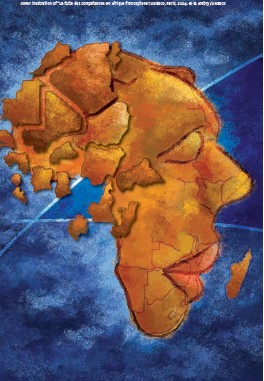
The UNESCO Hewlett-Packard “Piloting Solutions for Reversing Brain Drain into Brain Gain for Africa” project was launched yesterday to help reduce brain drain in Africa by providing universities laboratories and research centers in Algeria, Ghana, Nigeria, Senegal and Zimbabwe with systems of interconnections that will enable students and faculty who have stayed in their countries to establish links with researchers and professionals around the world.

The African project was developed by UNESCO’s Education Sector in response to requests by Member States. Over the past decades, African countries have suffered greatly from the emigration of skilled professionals, scientists, academics and researchers who are estimated to be leaving the continent at the rate of 20,000 a year.

The Education Ministries of the countries involved, along with UNESCO, will choose the universities that will benefit from the project. Preference will be given to university departments with important information technology components. HP will provide equipment and local human resources to the universities, as well as training and support, until the projects become self-sustainable. It will also donate PCs and monitors and fund research visits abroad and meetings between beneficiary universities. UNESCO will be in charge of overall coordination and monitoring of activities, as well as administrative management; evaluation and promotion of results.

This new project in Africa follows the successful joint HP-UNESCO “Piloting Solutions for Alleviating Brain Drain in South East Europe” project, launched in 2003. Three years after its launch, the project has resulted in the development of websites, databases and new research projects at several of the universities involved. Four universities* have become self-sustainable in the use of grid technology and the project continues in three other universities**.


*University of Split in Croatia, University of Montenegro, East Sarajevo University and the University of Sarajevo

**University of Belgrade, University of Skopje and the University of Tirana

Related

Check out the October 2006 issue of UNESCO’s “Education Today” Newsletter: From brain drain to brain gain (PDF)

UNESCO and the private sector

African students the most mobile in the world, From the UNESCO Institute for Statistics

Hewlett-Packard and UNESCO, A partnership that works

Sunday, November 19, 2006

Join the UNESCO/OECD Internet Discussion Forum on Open Educational Resources

UNESCO’s International Institute for Educational Planning (IIEP) and the OECD’s Centre for Educational Research and Innovation (CERI) are holding an Internet discussion forum to focus on the findings and conclusions from a draft OECD study on Open Educational Resources*, and raise awareness on OER. The Community of Interest that has been formed has been active since October 2005 and has more than 600 members from 94 countries. For more information about the Community and previous discussions, go to http://www.unesco.org/iiep/virtualuniversity/forums.php.

The forum will end on December 1st,2006. The upcoming sessions are organized as follows:

  • 20-26 November: What are the motives or incentives and barriers for individuals and institutions to use, produce and share OER?
  • 27 November – 1 December: What are the policy implications and the most pressing policy issues at institutional, regional and national level coming out from this study?

To participate in the forum, send an email to Susan D’Antoni with "Join OECD OER forum" in the subject line.
For more information and continuous updates regarding the OECD study, go to http://www.oecd.org/edu/oer.

*OER – educational resources that are freely available on the Internet for use, adaptation and re-use

Join the UNESCO/OECD Internet Discussion Forum on Open Educational Resources

UNESCO’s International Institute for Educational Planning (IIEP) and the OECD’s Centre for Educational Research and Innovation (CERI) are holding an Internet discussion forum to focus on the findings and conclusions from a draft OECD study on Open Educational Resources*, and raise awareness on OER. The Community of Interest that has been formed has been active since October 2005 and has more than 600 members from 94 countries. For more information about the Community and previous discussions, go to http://www.unesco.org/iiep/virtualuniversity/forums.php.

The forum will end on December 1st,2006. The upcoming sessions are organized as follows:

  • 20-26 November: What are the motives or incentives and barriers for individuals and institutions to use, produce and share OER?
  • 27 November – 1 December: What are the policy implications and the most pressing policy issues at institutional, regional and national level coming out from this study?

To participate in the forum, send an email to Susan D’Antoni with "Join OECD OER forum" in the subject line.
For more information and continuous updates regarding the OECD study, go to http://www.oecd.org/edu/oer.

*OER – educational resources that are freely available on the Internet for use, adaptation and re-use

Saturday, November 18, 2006

The Global Microscience Project (GPME)


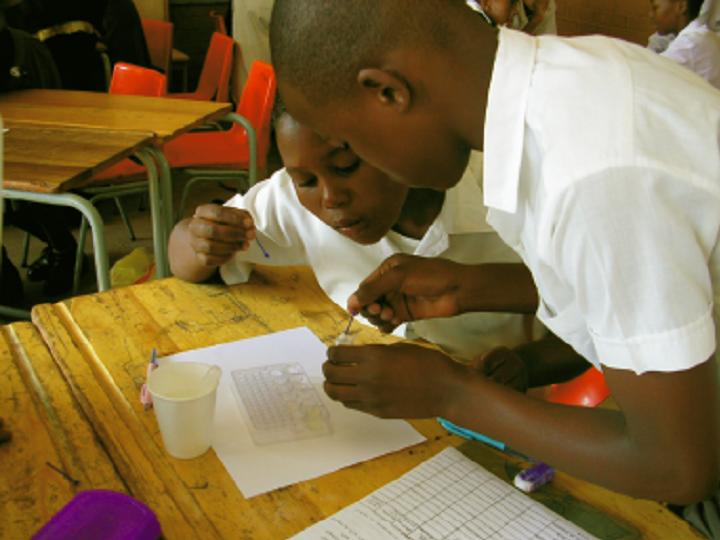
Practical experiences are an essential part of learning science. However, in many countries these experiences are not provided in the majority of their primary and secondary schools. There are several reasons for this: cost, safety, waste disposal and teacher preparation. Indeed, relatively few university students can be trained in science because of these factors. To help overcome these problems, microchemistry and other microscience kits and workbooks have been developed under this UNESCO project.

The project has been in existence for several years, and more than 80 countries have introduced microchemistry workshops and training courses. In some countries, UNESCO-Associated Centers have been established to further develop the microscience project. Now, English versions of the available microscience materials provide coverage of all educational levels: from primary to all of the secondary level (and university/tertiary level in some cases). While the set of teaching and learning packages is only complete in English, many specific microscience materials are available in other languages.

Download Microscience Materials (English Version): Click on the materials to download the different chapters.
I. Primary Microscience Experiences

II. Chemistry

III. Physics (Microelectricity)

IV. Biology