Wednesday, November 22, 2006

First Intergovernmental Committee for the Safeguarding of the Intangible Cultural Heritage Meeting

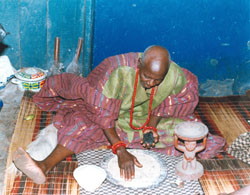
System of IFA Divination, Nigeria ©Wande Abimbola

The Intergovernmental Committee for the Safeguarding of the Intangible Cultural Heritage held their first meeting in Algiers on 18 and 19 November.

In charge of implementing UNESCO’s International Convention for the Safeguarding of the Intangible Cultural Heritage, the Committee’s first task is to prepare operational directives for the Convention, with particular attention to assistance mechanisms and criteria for inscription.

The 2003 Convention aims to safeguard a wide range of living heritage in forms such as oral traditions and expressions; performing arts; social practices, rituals and festive events; knowledge and practices relating to nature and the universe; and know-how linked to traditional crafts. Two Lists are established under the Convention: the Representative List of the Intangible Cultural Heritage of Humanity and the List of Intangible Cultural Heritage in Need of Urgent Safeguarding. The first inscriptions on the Lists should be carried out in the autumn of 2008.

Among the masterpieces of the oral and intangible cultural heritage of humanity proclaimed by UNESCO in 2001, 2003 and 2005, are manifestations such as the Oruro Carnival (Bolivia), the Ningyo Johruri Bunraku puppet theatre (Japan) and the Ahellil of Gourara, a poetic and musical genre emblematic of southwest Algeria.

In March 2004, Algeria became the first State to deposit its instrument of ratification of the Convention. As of 13 November 2006, 68 States ratified the Convention.

UNESCO Program of the Intangible Heritage

The 24 members of the Intergovernmental Committee


First Intergovernmental Committee for the Safeguarding of the Intangible Cultural Heritage Meeting

System of IFA Divination, Nigeria ©Wande Abimbola

The Intergovernmental Committee for the Safeguarding of the Intangible Cultural Heritage held their first meeting in Algiers on 18 and 19 November.

In charge of implementing UNESCO’s International Convention for the Safeguarding of the Intangible Cultural Heritage, the Committee’s first task is to prepare operational directives for the Convention, with particular attention to assistance mechanisms and criteria for inscription.

The 2003 Convention aims to safeguard a wide range of living heritage in forms such as oral traditions and expressions; performing arts; social practices, rituals and festive events; knowledge and practices relating to nature and the universe; and know-how linked to traditional crafts. Two Lists are established under the Convention: the Representative List of the Intangible Cultural Heritage of Humanity and the List of Intangible Cultural Heritage in Need of Urgent Safeguarding. The first inscriptions on the Lists should be carried out in the autumn of 2008.

Among the masterpieces of the oral and intangible cultural heritage of humanity proclaimed by UNESCO in 2001, 2003 and 2005, are manifestations such as the Oruro Carnival (Bolivia), the Ningyo Johruri Bunraku puppet theatre (Japan) and the Ahellil of Gourara, a poetic and musical genre emblematic of southwest Algeria.

In March 2004, Algeria became the first State to deposit its instrument of ratification of the Convention. As of 13 November 2006, 68 States ratified the Convention.

UNESCO Program of the Intangible Heritage

The 24 members of the Intergovernmental Committee


Tuesday, November 21, 2006

More International Students Earn Doctorates in the U.S.

© Ryan McVay/Taxi/Getty Images

International students represent an important means for strengthening U.S. cultural diplomacy around the world. New reports show that the United States continues to welcome more international students than any other country and that a growing percentage of the doctorates U.S. universities award are earned by students who are not residents of the United States.

According to a new report by the National Science Foundation (NSF), "U.S. Doctorates in the 20th Century", the largest groups of international students earning doctorates have come from China, India, Taiwan and South Korea. Students from the People's Republic of China, the largest international group, received more than 24,000 of the doctorates awarded by U.S. universities in the 1990s.

The NSF report describes the development of the unique U.S. graduate education in which fundamental research is conducted at universities, typically with the assistance of graduate students. The report also discusses other important changes in graduate education. Women made up 47 percent of all U.S.-citizen Ph.D.s from 1995 to 1999 -- a more than fourfold increase from 1960 to 1964, when they earned just 11 percent of U.S. doctorates. Minorities now earn about 14 percent of U.S. doctorates in both the sciences and engineering and in other fields as well.

Recent trends in international student enrollment in the United States reported by the American Council on Education (ACE) in Students on the Move: the Future of International Students in the United States show that by 2003 international students earned 55.3 percent of doctoral degrees in engineering, 44.3 percent in mathematics, and 43.8 percent in computer sciences.

International student enrollment declined slightly in the aftermath of the terrorist attacks on September 11, 2001, after more than 30 years of continuous growth. The ACE report attributes this decline to a variety of factors including "perceptions that it is difficult to secure visas and that the United States is unwelcoming to international students; competition from other countries; the high cost of U.S. higher education; increasing higher education capacity in countries that traditionally send a large number of students to study overseas, such as China and India; and increased anti-American sentiment around the world."

For more information, see the Department of State's e-Journal Study in the U.S.

©
Jeffrey Thomas/ U.S. DoS

More International Students Earn Doctorates in the U.S.

© Ryan McVay/Taxi/Getty Images

International students represent an important means for strengthening U.S. cultural diplomacy around the world. New reports show that the United States continues to welcome more international students than any other country and that a growing percentage of the doctorates U.S. universities award are earned by students who are not residents of the United States.

According to a new report by the National Science Foundation (NSF), "U.S. Doctorates in the 20th Century", the largest groups of international students earning doctorates have come from China, India, Taiwan and South Korea. Students from the People's Republic of China, the largest international group, received more than 24,000 of the doctorates awarded by U.S. universities in the 1990s.

The NSF report describes the development of the unique U.S. graduate education in which fundamental research is conducted at universities, typically with the assistance of graduate students. The report also discusses other important changes in graduate education. Women made up 47 percent of all U.S.-citizen Ph.D.s from 1995 to 1999 -- a more than fourfold increase from 1960 to 1964, when they earned just 11 percent of U.S. doctorates. Minorities now earn about 14 percent of U.S. doctorates in both the sciences and engineering and in other fields as well.

Recent trends in international student enrollment in the United States reported by the American Council on Education (ACE) in Students on the Move: the Future of International Students in the United States show that by 2003 international students earned 55.3 percent of doctoral degrees in engineering, 44.3 percent in mathematics, and 43.8 percent in computer sciences.

International student enrollment declined slightly in the aftermath of the terrorist attacks on September 11, 2001, after more than 30 years of continuous growth. The ACE report attributes this decline to a variety of factors including "perceptions that it is difficult to secure visas and that the United States is unwelcoming to international students; competition from other countries; the high cost of U.S. higher education; increasing higher education capacity in countries that traditionally send a large number of students to study overseas, such as China and India; and increased anti-American sentiment around the world."

For more information, see the Department of State's e-Journal Study in the U.S.

©
Jeffrey Thomas/ U.S. DoS

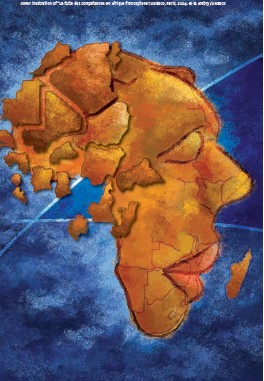
UNESCO and HP Launch Project To Counter Brain Drain In Africa


The UNESCO Hewlett-Packard “Piloting Solutions for Reversing Brain Drain into Brain Gain for Africa” project was launched yesterday to help reduce brain drain in Africa by providing universities laboratories and research centers in Algeria, Ghana, Nigeria, Senegal and Zimbabwe with systems of interconnections that will enable students and faculty who have stayed in their countries to establish links with researchers and professionals around the world.

The African project was developed by UNESCO’s Education Sector in response to requests by Member States. Over the past decades, African countries have suffered greatly from the emigration of skilled professionals, scientists, academics and researchers who are estimated to be leaving the continent at the rate of 20,000 a year.

The Education Ministries of the countries involved, along with UNESCO, will choose the universities that will benefit from the project. Preference will be given to university departments with important information technology components. HP will provide equipment and local human resources to the universities, as well as training and support, until the projects become self-sustainable. It will also donate PCs and monitors and fund research visits abroad and meetings between beneficiary universities. UNESCO will be in charge of overall coordination and monitoring of activities, as well as administrative management; evaluation and promotion of results.

This new project in Africa follows the successful joint HP-UNESCO “Piloting Solutions for Alleviating Brain Drain in South East Europe” project, launched in 2003. Three years after its launch, the project has resulted in the development of websites, databases and new research projects at several of the universities involved. Four universities* have become self-sustainable in the use of grid technology and the project continues in three other universities**.


*University of Split in Croatia, University of Montenegro, East Sarajevo University and the University of Sarajevo

**University of Belgrade, University of Skopje and the University of Tirana

Related

Check out the October 2006 issue of UNESCO’s “Education Today” Newsletter: From brain drain to brain gain (PDF)

UNESCO and the private sector

African students the most mobile in the world, From the UNESCO Institute for Statistics

Hewlett-Packard and UNESCO, A partnership that works
UNESCO and HP Launch Project To Counter Brain Drain In Africa


The UNESCO Hewlett-Packard “Piloting Solutions for Reversing Brain Drain into Brain Gain for Africa” project was launched yesterday to help reduce brain drain in Africa by providing universities laboratories and research centers in Algeria, Ghana, Nigeria, Senegal and Zimbabwe with systems of interconnections that will enable students and faculty who have stayed in their countries to establish links with researchers and professionals around the world.

The African project was developed by UNESCO’s Education Sector in response to requests by Member States. Over the past decades, African countries have suffered greatly from the emigration of skilled professionals, scientists, academics and researchers who are estimated to be leaving the continent at the rate of 20,000 a year.

The Education Ministries of the countries involved, along with UNESCO, will choose the universities that will benefit from the project. Preference will be given to university departments with important information technology components. HP will provide equipment and local human resources to the universities, as well as training and support, until the projects become self-sustainable. It will also donate PCs and monitors and fund research visits abroad and meetings between beneficiary universities. UNESCO will be in charge of overall coordination and monitoring of activities, as well as administrative management; evaluation and promotion of results.

This new project in Africa follows the successful joint HP-UNESCO “Piloting Solutions for Alleviating Brain Drain in South East Europe” project, launched in 2003. Three years after its launch, the project has resulted in the development of websites, databases and new research projects at several of the universities involved. Four universities* have become self-sustainable in the use of grid technology and the project continues in three other universities**.


*University of Split in Croatia, University of Montenegro, East Sarajevo University and the University of Sarajevo

**University of Belgrade, University of Skopje and the University of Tirana

Related

Check out the October 2006 issue of UNESCO’s “Education Today” Newsletter: From brain drain to brain gain (PDF)

UNESCO and the private sector

African students the most mobile in the world, From the UNESCO Institute for Statistics

Hewlett-Packard and UNESCO, A partnership that works

Sunday, November 19, 2006

Join the UNESCO/OECD Internet Discussion Forum on Open Educational Resources

UNESCO’s International Institute for Educational Planning (IIEP) and the OECD’s Centre for Educational Research and Innovation (CERI) are holding an Internet discussion forum to focus on the findings and conclusions from a draft OECD study on Open Educational Resources*, and raise awareness on OER. The Community of Interest that has been formed has been active since October 2005 and has more than 600 members from 94 countries. For more information about the Community and previous discussions, go to http://www.unesco.org/iiep/virtualuniversity/forums.php.

The forum will end on December 1st,2006. The upcoming sessions are organized as follows:

  • 20-26 November: What are the motives or incentives and barriers for individuals and institutions to use, produce and share OER?
  • 27 November – 1 December: What are the policy implications and the most pressing policy issues at institutional, regional and national level coming out from this study?

To participate in the forum, send an email to Susan D’Antoni with "Join OECD OER forum" in the subject line.
For more information and continuous updates regarding the OECD study, go to http://www.oecd.org/edu/oer.

*OER – educational resources that are freely available on the Internet for use, adaptation and re-use