Wednesday, January 10, 2007

UNESCO Awards Czech Film Festival One World

The following is excerpted from Prague's Daily Monitor, 01/03/2007

UNESCO has given a special mention to the One World International Documentary Film Festival focused on human rights annually held in the Czech Republic. UNESCO has been presenting awards for human rights education every other year since 1978. In 1990 the award was given to then Czechoslovak and later Czech president Vaclav Havel. Havel reportedly proposed the candidacy of the Czech festival, presenting documentaries focused on human rights issues.

The One World festival has been annually held in Prague and other Czech towns since 1999. Last year, the event offered almost 120 films from 40 countries. This year´s festival will be held from February 28 to March 30. Click here for further information on One World 2007.
© Prague Daily Monitor

UNESCO Awards Czech Film Festival One World

The following is excerpted from Prague's Daily Monitor, 01/03/2007

UNESCO has given a special mention to the One World International Documentary Film Festival focused on human rights annually held in the Czech Republic. UNESCO has been presenting awards for human rights education every other year since 1978. In 1990 the award was given to then Czechoslovak and later Czech president Vaclav Havel. Havel reportedly proposed the candidacy of the Czech festival, presenting documentaries focused on human rights issues.

The One World festival has been annually held in Prague and other Czech towns since 1999. Last year, the event offered almost 120 films from 40 countries. This year´s festival will be held from February 28 to March 30. Click here for further information on One World 2007.
© Prague Daily Monitor

Tuesday, January 9, 2007

UNESCO's Guide for Electronic Theses and Dissertations


The Electronic Thesis and Dissertation (ETD) site is a resource for graduate students who are writing theses or dissertations, for graduate faculty who want to mentor ETD authors, for graduate deans who want to initiate ETD programs, and for IT administrators at universities.

Published by UNESCO, The Guide is an international, "living" document, written by ETD scholars throughout the world. The Editors, Web Administrators, Graphic Designers of the Guide are Professors from prestigious US Universities such as Cornell, whose goal is to identify "technologically innovative" theses and dissertations, and provide models of new media scholarship for the next generation of scholars and researchers.

Theses or dissertations that are "technologically innovative" are crafted in new ways, perhaps using streaming multimedia, interactive features (chats, listservs, response questionnaires, three-dimensional models, animation.

The Guide will be updated regularly based on submissions by ETD authors and NDLTD members. You may access the ETDs collection, or submit your innovative dissertation on the ETD website.
© Picture: Mahidol University

UNESCO's Guide for Electronic Theses and Dissertations


The Electronic Thesis and Dissertation (ETD) site is a resource for graduate students who are writing theses or dissertations, for graduate faculty who want to mentor ETD authors, for graduate deans who want to initiate ETD programs, and for IT administrators at universities.

Published by UNESCO, The Guide is an international, "living" document, written by ETD scholars throughout the world. The Editors, Web Administrators, Graphic Designers of the Guide are Professors from prestigious US Universities such as Cornell, whose goal is to identify "technologically innovative" theses and dissertations, and provide models of new media scholarship for the next generation of scholars and researchers.

Theses or dissertations that are "technologically innovative" are crafted in new ways, perhaps using streaming multimedia, interactive features (chats, listservs, response questionnaires, three-dimensional models, animation.

The Guide will be updated regularly based on submissions by ETD authors and NDLTD members. You may access the ETDs collection, or submit your innovative dissertation on the ETD website.
© Picture: Mahidol University

Monday, January 8, 2007

UNESCO and the Management of Social Transformations

The Management of Social Transformations (MOST) Program, which is part of the Social and Human Sciences Sector (SHS) of UNESCO, is the first intergovernmental initiative launched within the United Nations System, and was created to “manage social transformation”.From 1994 to 2003, the program focused on international research. The most recent initiative (2004-2013) focuses primarily on the need to link international public action networks to those of researchers and experts. The goal is to make social science research relevant to concrete political issues. The program works in close relationship with National Committees established in 63 countries.
MOST promotes a culture of evidence-based policy-making – nationally, regionally and internationally. The initiative seeks new ways to widely distribute information pertinent to target groups including social affairs ministers, regional and local authorities, the media, grass-roots organizations, civil society and the academic community. A series of services and resources was developed to meet their needs.

Launched at the end of spring 2005, the MOST-2 Digital Library, is a clearing house for the program’s publications. A multilingual search engine makes it easy to access documents.

More about MOST, Phase II: Bridging research and policy-making

About Growing Up In Cities, a UNESCO/MOST project

Events:
MOST-UNESCO Summer School for Latin America and the Caribbean , Salvador de Bahía, Brazil, 26 February to 2 March 2007
This Summer School aims to bring together young researchers, scholars and students following a Masters degree or a PhD from the region. The program will concentrate on the following themes: poverty, social management and local development.

UNESCO and the Management of Social Transformations

The Management of Social Transformations (MOST) Program, which is part of the Social and Human Sciences Sector (SHS) of UNESCO, is the first intergovernmental initiative launched within the United Nations System, and was created to “manage social transformation”.From 1994 to 2003, the program focused on international research. The most recent initiative (2004-2013) focuses primarily on the need to link international public action networks to those of researchers and experts. The goal is to make social science research relevant to concrete political issues. The program works in close relationship with National Committees established in 63 countries.
MOST promotes a culture of evidence-based policy-making – nationally, regionally and internationally. The initiative seeks new ways to widely distribute information pertinent to target groups including social affairs ministers, regional and local authorities, the media, grass-roots organizations, civil society and the academic community. A series of services and resources was developed to meet their needs.

Launched at the end of spring 2005, the MOST-2 Digital Library, is a clearing house for the program’s publications. A multilingual search engine makes it easy to access documents.

More about MOST, Phase II: Bridging research and policy-making

About Growing Up In Cities, a UNESCO/MOST project

Events:
MOST-UNESCO Summer School for Latin America and the Caribbean , Salvador de Bahía, Brazil, 26 February to 2 March 2007
This Summer School aims to bring together young researchers, scholars and students following a Masters degree or a PhD from the region. The program will concentrate on the following themes: poverty, social management and local development.

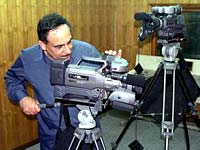
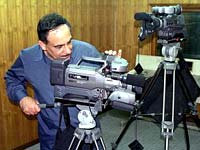
Towards a Free, Pluralistic, Vibrant Media in Iraq

An International Conference on Freedom of Expression and Media Development in Iraq will take place from 8 to 10 January at UNESCO Paris Headquarters. The conference is organized by the Communications and Media Commission of Iraq (CMC)* in cooperation with UNESCO and UNDP. A session will be devoted to journalists who have risked – and in all too many cases lost – their lives to cover events in Iraq.

The Conference will provide a forum for debate, reflection and analysis of different issues concerning the Iraqi media landscape and its development needs, addressing such themes as: journalist safety; international assistance; ownership, editorial independence, pluralism; professional standards; human and institutional capacity building and gender issues; markets and commercial sustainability; public service broadcasting; regulatory frameworks and legislation.

With the recent constitution of Iraq’s first permanent government, it is an ideal time to meet again and to take stock of the most pressing challenges faced by Iraqi journalists and media outlets. Furthermore, there remains a great deal to do in terms of journalist protection and capacity-building.

The consensus of opinion is that a conference should be held to refocus attention on challenges faced by Iraqi media, and that the chances of success of such a conference would increase with the involvement of United Nations organizations-players with the objectivity and gravitas to encourage all parties to work together toward common goals.
Some 180-200 participants, including a delegation of Iraqi media professionals, international NGOs and other implementing organizations, donors, Iraqi government officials and other policy makers are expected to attend the event.

*The Communications and Media Commission of Iraq (CMC) was established in mid-2004 under Iraqi law as the independent regulatory body with exclusive authority to license and regulate broadcasting and telecommunications in Iraq. In addition to these regulatory responsibilities, the law obliges the CMC to work towards developing media in Iraq - including print, internet and other media - in accordance with internationally-accepted best practices and requirements of international law for freedom of expression and media independence.

© Photo: UNESCO/ Giovanni Boccardi, Iraki TV, UNESCO provided equipment and trained staff