The United Nations inaugurated the commemoration in 2005.
Against a backdrop of 180 yahrzeit candles. the program included speeches by UNESCO, French and philanthropic leaders. They included UNESCO's director, Gen. Koichiro Matsuura, and Simone Veil, a former French minister and Auschwitz survivor who is the honorary president of the Rothchild Foundation.
Survivors and members of the Sons and Daughters of Survivors Association headed by Serge Klarsfeld were among those who attended the ceremony, which featured the French army choir singing Jewish religious hymns. An exhibit assembled by the Yad Vashem Holocaust museum in Jerusalem was inaugurated at the UNESCO complex.
Wednesday, January 30, 2008
UNESCO and The Universal Declaration of Human Rights
 Eleanor Roosevelt with a copy
of the Universal Declaration of
Human Rights
This year the United Nations, and indeed the whole world, are celebrating the 60th anniversary of the Universal Declaration of Human Rights.
The English Bill of Rights was passed in 1689. The French Declaration of the Rights of Man and the Citizen was adopted in 1789. The U.S. Bill of Rights was introduced as ten amendments to the Constitution in 1789 and ratified in 1791. Thus in three countries, political and civil rights were codified by the end of the 18th century. People were seen as having a right to participate in the governance of their nation, and to have natural rights that would be protected against the "divine rights" of kings and the aristocracy.
The social and economic rights of man took longer to recognize. However, with the increasing wealth of Western nations, people began to demand that all people in those nations had the rights to be free from hunger, that they shared with the rich the right to at least a basic education, and to some standard of care during their illness. In the Great Depression, the right to work, to a living wage, and to some form of social security for the young and old became evident, notably to the Government of the United States.
At the end of World War II, the United States was the world's super power militarily, economically, scientifically, culturally, and politically. The U.S. Government, serious in its concern to avoid the mistakes made after World War I, sought to establish with its allies a United Nations that would help to keep the peace. The United Nations would succeed where the League of Nations had failed. As the Bill of Rights was a needed complement to the U.S. Constitution, so the Universal Declaration of Human Rights would be a complement to the Charter of the United Nations.
The existence of the Universal Declaration is due in large part to the determination of non-governmental organizations (along with a number of smaller countries, particularly those from Latin America). A Pan-American conference held in Mexico City in February and March of 1945 consolidated Latin American determination to see human rights included in the UN Charter. Over 1,300 American non-governmental organizations joined together in placing newspaper ads calling for human rights to be an integral part of any future international organization. Individually and collectively, these advocates demanded that the United Nations Charter include a clear and substantive commitment to human rights.
Based on the recommendations of a commission chaired by Eleanor Roosevelt, the UN’s Economic and Social Council established the official UN Commission on Human Rights in June 1946. The Council selected eighteen members to sit on the Human Rights Commission. U.S. Delegate Eleanor Roosevelt was elected Chairperson. Her role was crucial. Not only was she the widow of Franklin Delano Roosevelt, credited with leading the United States out of the Depression and to victory in World War II -- with enormous prestige among the allied nations -- but she had acted often for him due to his disability and in her own right in the defense of human rights. Moreover, she was an exceptionally capable leader in bringing people with divergent views together to agree on that which they could share.
A number of organizations prepared inputs to the process of writing the Declaration. UNESCO, specifically, was asked to examine whether there were in fact universally recognized human rights. Were human rights recognized only in the traditions of Western culture, or were they also recognized in Asian, African, and Middle Eastern cultures. Indeed, there was a great divide among those who felt that there were natural rights established at the creation of man, and those who felt that rights accumulated through a historical process and that the rights of man in the late 1940's differed from those of the past, and from those that would be recognized in the future.
UNESCO created a distinguished committee in 1947 to consider the matter. They in turn invited intellectual leaders from all over the world to provide inputs describing human rights, and indicating the sources of those rights in the traditions of their own cultures. The committee sent forward a report to the United Nations setting forth the grounds for the Declaration, a report which was quite influential in the final creation of the Universal Declaration. Importantly, the committee recognized that people everywhere recognized a right to life and dignity, certain freedoms, and aspirations for rights to at least a minimum standard of life. Even when people could not agree on the philosophical basis from which those rights were derived, they agreed that those rights did exist and should be recognized by nations.
 A book was published from the committee's work titled Human Rights: Comments and Interpretations: A Symposium Edited by UNESCO. The book included an introduction by Jacques Maritain, and included contributions by Mahatma Gandhi, Harold Laski, Pierre Teilhard de Chardin, Chung-Shu Lo, Aldous Huxley, and Ralph Gerard. It illustrated the power of UNESCO which could provide a forum for intellectual leaders from different continents and traditions to discuss intellectual issues of global importance, and find ways to reach agreement.
Maritain, who headed the French delegation to the Second General Conference of UNESCO, in his introduction to the book, wrote looking back at his speech to the General Conference:
"How", I asked, "can we imagine an agreement of minds between men who are gathered together precisely in order to accomplish a common intellectual task, men who come from different cultures and civilizations, but are of antagonistic spiritual associations and schools of thought...? Because, as I said at the beginning of my speech, the goal of UNESCO is a practical goal, agreement between minds can be reached spontaneously, not on the basis of common speculative ideas, but on common practical ideas, not on the affirmation of one and the same conception of the world, of man and of knowledge, but on the affirmation of a single body of beliefs for guidance in action. No doubt this is little enough but it is the last resort of intellectual agreement. It is, nevertheless, enough for a great task to be undertaken, and it would do much to crystallize this body of common practical convictions.UNESCO continues to include human rights actions as a central part of its concerns, including through its:
Monday, January 21, 2008
UK Seminar on Scientific World Heritage Sites
A three-day international workshop, designed to develop guidelines to identify future World Heritage Sites which represent advances in science and technology of global significance, will be hosted next week by the Department for Culture, Media and Sport and the UK National Commission for UNESCO on behalf of the World Heritage Committee.
The workshop, taking place from 21-23 January, brings together experts from 15 countries, representing the physical sciences and technology as well as those with detailed knowledge of the operation of the UNESCO World Heritage Convention.
The delegates will discuss ways to create a scientific framework, to help identify and recognize sites which represent the heritage of science and technology that could potentially become World Heritage Sites. The conclusions of the expert meeting will be presented to the World Heritage Committee for consideration at their next meeting this July in Quebec, Canada.
The workshop, taking place from 21-23 January, brings together experts from 15 countries, representing the physical sciences and technology as well as those with detailed knowledge of the operation of the UNESCO World Heritage Convention.
The delegates will discuss ways to create a scientific framework, to help identify and recognize sites which represent the heritage of science and technology that could potentially become World Heritage Sites. The conclusions of the expert meeting will be presented to the World Heritage Committee for consideration at their next meeting this July in Quebec, Canada.
1. The program for the workshop can be found on the UK National Commission for UNESCO website at http://www.unesco.org.uk/Science-Heritage-Meeting.htm.Editorial Comment: Given American leadership during much of the last century in science and technology, I would think that the United States might proudly claim a number of such world heritage sites. How about Cape Canaveral, Edison's laboratory, the sites of the American System of Manufacturing, the University of Chicago site of the first nuclear reactor, a site linked to the invention of the Internet, etc. JAD
2. There will be particular focus on four areas: astronomy, physical sciences, biological sciences and engineering and technology.
3. This workshop was organized at the UK's suggestion during the 31st session of the World Heritage Committee, held last July in Christchurch, New Zealand.
4. The outcome of this meeting will contribute to the development of guidelines for the identification of sites and a preliminary framework for the evaluation of properties of interest for the heritage of science and technology and their potential inscription on the World Heritage List. The recommendations of the Workshop will be submitted to the 32nd session of the World Heritage Committee. This session will be held from 2-10 July in Quebec, Canada.
5. The concept of World Heritage Sites is at the core of the World Heritage Convention, adopted by UNESCO in 1972, to which 184 nations belong. The Convention required the establishment of the World Heritage List, under the management of an inter-governmental World Heritage Committee, as a means of recognizing that some places, both natural and cultural, are of sufficient importance to be the responsibility of the international community as a whole. The UK ratified the World Heritage Convention in 1984.
Two from Roger Coate
Roger Coate, a long time member of the Board of Directors of Americans for UNESCO has published two important articles in The Interdependent Winter 2007-2008 issue. The Interdependent is the flagship publication of the United Nations Association of the United States of America (UNA-USA).
- Poverty Goals: The Possible, the Probable, the Unlikely
The article points out that while the Millennium Development Goals are not likely to be met, their importance may not be so much in defining a specific development path as in creating a process by which the nations of the world focus on poverty and agree on means to combat it.
- AID AND DEBT RELIEF: Development’s Bottom Line
Coate shows that the donor community is lagging badly on its committments to provide financial assistance to developing nations. Moreover, that assistance is being focused on only a few countries, such as Iraq and Afghanistan. The lack of donor assistance, which is covered in MDG 8, is in part responsible for the shortfall in meeting the other Millennium Development Goals. So too is the international trade domain that does not allow developing nations equitable access to international markets. Coate notes that a bad as the failure to achieve the Millennium Development Goals might be, abandonment of the global effort to erradicate poverty would be much worse for the world.
Thursday, January 17, 2008
Culture and Human Rights
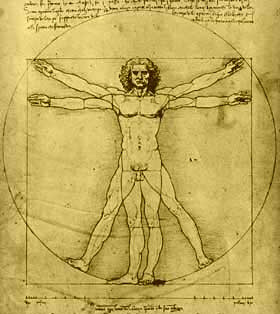 Culture and Human Rights
 Created in 1945 to combat "the denial of the democratic principles of the dignity, equality and mutual respect of men", UNESCO, through its founding ideals, prefigured the Universal Declaration of Human Rights proclaimed sixty years ago. For the signatory states of the UNESCO Constitution, the “dissemination of culture” is more than a right; it is a sacred obligation.
- Text of the Universal Declaration:
A common ideal that remains relevant in today’s world - UNESCO Conventions in the field of culture:
A comprehensive series of standard-setting instruments - Social Status of the Artist:
World Observatory and copyright - The Slave Route Project:
Understanding and combating modern forms of slavery - An Alliance of Civilizations:
A partnership for the future
UNESCO and partners help teachers bring technology to the classroom
 UNESCO initiated, in 2006, a project aimed at providing core standards for the integration of information and communication technology (ICT) into the classroom. Competency Standards for Teachers (CST) were launched on 8 January 2008 after two years of development, at the Moving Young Minds conference, an international seminar gathering 100 education ministers from around the world to discuss the role of technology in enhancing education.
UNESCO takes Mini-laboratories and Microscience to the Middle East
 For a decade now, UNESCO has been introducing the methodology for microscience into the education systems of both developed and developing countries. One of UNESCO’s key partners in this endeavour is the RADMASTE Centre, Witwatersrand University, South Africa. Training workshops in microscience have been organized in some 84 countries and recently, UNESCO has turned its attention to the Middle East.
In collaboration with the Islamic Organization for Education, Science and Culture (ISESCO), UNESCO has introduced the microscience project into Jordan, Lebanon, the Palestinian Territories and Syria. As project coordinator at UNESCO, Maria Liouliou took part in the first training workshops in Beirut and Ramallah, in November 2006 and February 2007.
The microscience methodology gives primary and secondary school pupils and university students alike an opportunity to conduct practical scientific experiments in physics, chemistry and biology using kits that come with a textbook. These kits are veritable mini-laboratories. They are perfectly safe, insofar as pupils never need to use more than a couple of drops of chemicals for each experiment. The kits are also affordable and far cheaper than conventional laboratory material. Each kit is compact, can be reused and is unbreakable because made of plastic. In addition, the small quantities of chemicals used make it environment-friendly.
Subscribe to:
Posts (Atom)