The U.S. National Commission for UNESCO will meet by conference call on Wednesday, April 23, at 11a.m. The meeting of this advisory committee will last until approximately 12:00 p.m., and the call is open to the public.
The U.S. National Commission for UNESCO was asked to provide recommendations on a proposal received to establish a UNESCO Chair. For more information about the Program see http://www.state.gov/p/io/unesco/c14222.htm. The call will also be an opportunity to provide an update on recent and upcoming UNESCO and U.S. National Commission for UNESCO activities.
For more information on this conference call, or to participate in it, please contact the Executive Secretariat of the National Commission at 202-663-0026.
Friday, April 11, 2008
Wednesday, April 9, 2008
David Adams Website: Global Movement Towards a Culture of Peace
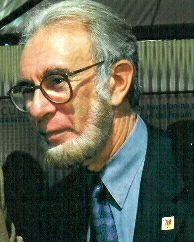
David Adams until his retirement from UNESCO in 2001 was responsible for UNESCO's commemoration of the International Year of the Culture of Peace and was the architect of many of the Culture of Peace programs. Following a career as Professor of Psychology for 23 years at Wesleyan University, he had come to UNESCO in 1992 to develop the Culture of Peace Program.
He currently maintains a website in support of the development of a global culture of peace.
Editorial: The United States Positions At UNESCO
What should be the United States position with respect to UNESCO as we enter the 21st Century?
UNESCO seeks to build the defenses of peace in the minds of men. It seeks to promote international cooperation among the intellectual communities of its member states, It is the lead agency for the United Nations in education, science, culture and communications. It describes itself as a laboratory of ideas, as a standard setter, as a clearing house, as a builder of capacity in Member States and as a catalyst for international cooperation.
The United States cooperated in the creation of UNESCO, with post World War II leaders seeing it as important to a variety of U.S. foreign policy interests. It withdrew from UNESCO in 1984 when -- due to UNESCO's bureaucratic inefficiencies and to some areas in which the majority of governments opposed the positions of the United States -- a later administration concluded that UNESCO no longer was a cost-effective vehicle for achieving U.S. foreign policy objectives. In 2002, following improvements in the operations and efficiency of UNESCO and changes in aspects of UNESCO's policies and programs, the United States government decided to rejoin the Organization.
U.S. Foreign Policy Objectives
The dominant foreign policy objectives of the United States are assuring the security and economic health of the nation. Humanitarian concerns are also important, realized through provision of relief to the victims of disaster and provision of foreign assistance for the alleviation of poverty. There are increasing concerns for global problems, such as protecting the health of the nation from global epidemics, protection of the global environment, and protection of World Heritage from the threats that arise from globalization.
The State Department has also maintained a program of cultural diplomacy, which has been under-appreciated. Cultural diplomacy has the potential to help bridge the cultural divides between the people of the United States and the peoples of other nations, tand indeed to prepare U.S. government officials to deal with people from other cultures.
It is also important that the U.S. builds support for and reduces resistance to its own diplomatic priorities. Importantly, diplomats engage in give and take in international fora, supporting the priorities of other nations and building alliances.
UNESCO's Potential Importance to U.S. Diplomacy
UNESCO's efforts to promote peace through appropriate education programs, and its ability to promote better understanding among people of different cultures are increasingly important to U.S. security, as indeed is UNESCO's ability as a neutral party to allow the global scientific community to reach consensus on issues such as the location and availability of water resources or the appropriate management of ocean resources.
UNESCO's leadership of the global Education for All program, its intergovernmental scientific programs, its World Heritage program, and its network of conventions governing cultural property are additional examples of highly cost- effective vehicles for the United States by which UNESCO is achieving objectives of U.S. foreign policy as well as objectives of many other member states.
UNESCO can serve as a neutral venue for discussions between the United States and other nations. In some cases those discussions are important in themselves and in others they are important in building confidence for later negotiations. Similarly, it serves as a venue in which other countries can meet, advancing peace processes and cultural understanding in ways that are indirectly important to the United States.
UNESCO offers a vehicle to help network U.S. educations, scientists and cultural leaders with their counterparts in other nations. Such networking is important in achieving a number of foreign policy objectives, and indeed is so valued by the U.S. communities involved that it is itself an increasingly important objective in terms of service to the public.
Priorities
As a result of the 18 year absence of the United States from UNESCO membership, the immediate concern is to reestablish U.S. influence in the governance of UNESCO while seeking changes in policy and programs that further advance U.S. foreign polity interests.
Another immediate priority is reacquainting the U.S. communities with UNESCO, and increasing the involvement of leaders of those communities in the work of UNESCO. In this respect, the U.S. National Commission could again be an important instrument as it was in the distant past.
Of course, the United States is interested in UNESCO's ability to work effectively and efficiently. UNESCO will not be an useful vehicle for achieving U.S. foreign policy objectives if it is allowed to be ineffective or inefficient in carrying out its constitutionally assigned mission. Thus the U.S. should use its influence in the governing bodies of UNESCO to assure it is well led and efficiently run.
UNESCO's most important objectives have not been met in six decades of its existence, and will not be quickly met in the future. Every U.S. administration seeks to have results to show in four or eight years. The U.S. should be willing, given the modest size of the UNESCO budget, to give priority to those long term efforts likely to contribute most to peace and prosperity in a livable environment.
Perhaps the most important priority might be to fully incorporate UNESCO as an instrument of U.S. cultural diplomacy, encouraging the organization to promote cultural development in its member states. UNESCO quite properly follows the mandate of its member states to protect and promote cultural diversity. Globalization often results in pressures driving cultural changes which are unpleasant to the members of the changing cultures and indeed sometimes immoral or unethical to the majority of the people.
This is not to say that cultural change itself is unacceptable, but rather that the directions and processes of cultural change must be more acceptable. While the world's cultures are hugely diverse, there is wide agreement among nations on universal rights of man. Consequently, there is likely to be wide agreement that cultural changes are acceptable when they help to assure that people within a culture can more fully achieve those rights. Indeed, it is clear that cultural development is important for achieving peace, for assuring that peoples rights to a decent life, and indeed for assuring freedom of expression and freedom from coercion.
Thus U.S. cultural diplomacy should seek to encourage UNESCO to promote processes which engage the members of the cultures of the world to embrace those changes which will help them to more fully achieve the rights of their members which all nations have agreed to be universal rights.
John Daly
The ideas expressed in this posting are those of the author alone, and do not necessarily represent those of Americans for UNESCO or any other organization.
UNESCO seeks to build the defenses of peace in the minds of men. It seeks to promote international cooperation among the intellectual communities of its member states, It is the lead agency for the United Nations in education, science, culture and communications. It describes itself as a laboratory of ideas, as a standard setter, as a clearing house, as a builder of capacity in Member States and as a catalyst for international cooperation.
The United States cooperated in the creation of UNESCO, with post World War II leaders seeing it as important to a variety of U.S. foreign policy interests. It withdrew from UNESCO in 1984 when -- due to UNESCO's bureaucratic inefficiencies and to some areas in which the majority of governments opposed the positions of the United States -- a later administration concluded that UNESCO no longer was a cost-effective vehicle for achieving U.S. foreign policy objectives. In 2002, following improvements in the operations and efficiency of UNESCO and changes in aspects of UNESCO's policies and programs, the United States government decided to rejoin the Organization.
U.S. Foreign Policy Objectives
The dominant foreign policy objectives of the United States are assuring the security and economic health of the nation. Humanitarian concerns are also important, realized through provision of relief to the victims of disaster and provision of foreign assistance for the alleviation of poverty. There are increasing concerns for global problems, such as protecting the health of the nation from global epidemics, protection of the global environment, and protection of World Heritage from the threats that arise from globalization.
The State Department has also maintained a program of cultural diplomacy, which has been under-appreciated. Cultural diplomacy has the potential to help bridge the cultural divides between the people of the United States and the peoples of other nations, tand indeed to prepare U.S. government officials to deal with people from other cultures.
It is also important that the U.S. builds support for and reduces resistance to its own diplomatic priorities. Importantly, diplomats engage in give and take in international fora, supporting the priorities of other nations and building alliances.
UNESCO's Potential Importance to U.S. Diplomacy
UNESCO's efforts to promote peace through appropriate education programs, and its ability to promote better understanding among people of different cultures are increasingly important to U.S. security, as indeed is UNESCO's ability as a neutral party to allow the global scientific community to reach consensus on issues such as the location and availability of water resources or the appropriate management of ocean resources.
UNESCO's leadership of the global Education for All program, its intergovernmental scientific programs, its World Heritage program, and its network of conventions governing cultural property are additional examples of highly cost- effective vehicles for the United States by which UNESCO is achieving objectives of U.S. foreign policy as well as objectives of many other member states.
UNESCO can serve as a neutral venue for discussions between the United States and other nations. In some cases those discussions are important in themselves and in others they are important in building confidence for later negotiations. Similarly, it serves as a venue in which other countries can meet, advancing peace processes and cultural understanding in ways that are indirectly important to the United States.
UNESCO offers a vehicle to help network U.S. educations, scientists and cultural leaders with their counterparts in other nations. Such networking is important in achieving a number of foreign policy objectives, and indeed is so valued by the U.S. communities involved that it is itself an increasingly important objective in terms of service to the public.
Priorities
As a result of the 18 year absence of the United States from UNESCO membership, the immediate concern is to reestablish U.S. influence in the governance of UNESCO while seeking changes in policy and programs that further advance U.S. foreign polity interests.
Another immediate priority is reacquainting the U.S. communities with UNESCO, and increasing the involvement of leaders of those communities in the work of UNESCO. In this respect, the U.S. National Commission could again be an important instrument as it was in the distant past.
Of course, the United States is interested in UNESCO's ability to work effectively and efficiently. UNESCO will not be an useful vehicle for achieving U.S. foreign policy objectives if it is allowed to be ineffective or inefficient in carrying out its constitutionally assigned mission. Thus the U.S. should use its influence in the governing bodies of UNESCO to assure it is well led and efficiently run.
UNESCO's most important objectives have not been met in six decades of its existence, and will not be quickly met in the future. Every U.S. administration seeks to have results to show in four or eight years. The U.S. should be willing, given the modest size of the UNESCO budget, to give priority to those long term efforts likely to contribute most to peace and prosperity in a livable environment.
Perhaps the most important priority might be to fully incorporate UNESCO as an instrument of U.S. cultural diplomacy, encouraging the organization to promote cultural development in its member states. UNESCO quite properly follows the mandate of its member states to protect and promote cultural diversity. Globalization often results in pressures driving cultural changes which are unpleasant to the members of the changing cultures and indeed sometimes immoral or unethical to the majority of the people.
This is not to say that cultural change itself is unacceptable, but rather that the directions and processes of cultural change must be more acceptable. While the world's cultures are hugely diverse, there is wide agreement among nations on universal rights of man. Consequently, there is likely to be wide agreement that cultural changes are acceptable when they help to assure that people within a culture can more fully achieve those rights. Indeed, it is clear that cultural development is important for achieving peace, for assuring that peoples rights to a decent life, and indeed for assuring freedom of expression and freedom from coercion.
Thus U.S. cultural diplomacy should seek to encourage UNESCO to promote processes which engage the members of the cultures of the world to embrace those changes which will help them to more fully achieve the rights of their members which all nations have agreed to be universal rights.
John Daly
The ideas expressed in this posting are those of the author alone, and do not necessarily represent those of Americans for UNESCO or any other organization.
Sunday, April 6, 2008
Editorial: UNESCO Needs to be Reinvented for the 21st Century
UNESCO still reflects the management systems of the time it was created in the aftermath of World War II. It is time to reorganize UNESCO, taking into account the advances in organizational design made possible by the Information Revolution, and prepare UNESCO for the challenges of the 21st Century.
UNESCO should focus on International Networks. It should decentralize, outsource back office functions, conduct much more of its activity via the Internet, focus far more on its core functions, and spin off functions that distract it governors and leaders from those core functions.
Why UNESCO Is the Way It Is
When UNESCO was founded, transportation was far less developed than it is today; there was no commercial jet air travel, and the international air travel system was rudimentary. People in developed nations listened to the radio, but the transistor radio had not yet been invented and much of the world was even out of radio broadcast range. Television was an invention waiting for a market. Making an international phone call was a lengthly and expensive undertaking. The intellectual communities that UNESCO was designed to serve were concentrated in a couple of score of rich countries, and got their information from print media.
There were few intergovernmental organizations in existence before the 1940s, and thus few models that UNESCO could copy. The most applicable was probably the International Institute for Intellectual Cooperation with its 40 national committees, and the founders of UNESCO did indeed draw heavily on that experience. However, at that time the dominant organizational form used by government and corporations was hierarchical with a central headquarters and dependent field offices. There were few international corporations in today's sense of that term, and even fewer that emphasized knowledge services.
Not surprisingly then, UNESCO was created with a highly centralized bureaucracy (in Paris), and depended heavily on publication in the print media for its information products. Its founders rejected a French proposal that the national delegations to UNESCO be tripartite, with representatives of the National Commissions and Civil Society as well as government; government was given full control. National Commissions were, however, included in the UNESCO constitution both to advise their governments and to serve as channels of communication between UNESCO and the educational, scientific and cultural communities within the member states.
With decolonization and the epoch of development assistance, UNESCO had to reorganize to some degree in order to carry out its development assistance mission. Similarly, as the network of intergovernmental organizations exploded to include thousands of such organizations, and as governments became more familiar with the concepts of intergovernmental organizations and organized to deal with them on a regular basis, many of the successful UNESCO programs were restructured to have governance shared between UNESCO and their own intergovernmental governance committees. Similarly, many decentralized centers and Institutes came into being, and many have governance structures that respond to UNESCO and to their external donors.
21st Century Management
The Information Revolution has led to major changes in management theory. The hierarchical organization of the 20th century was an effective way to manage national systems that were created to achieve economies of scale in production of goods and services and to distribute products via the elaborating transportation infrastructure to national markets. Companies grew by vertical integration of productive and distribution activities, and later by aggregation of different enterprises into conglomerates. Since intra-organizational information systems were at the time more efficient in coordinating the disparate operations of production and distribution than were markets, large organizations were created.
In the 21st century, e-commerce has come to demonstrate that market processes can be more efficient that intra-organizational ones. Business to business e-commerce is growing, and corporations are focusing more on core competencies, buying the inputs needed for those competencies in one set of markets, and selling their products in another set of markets. Indeed, back office functions, once thought to be core functions of any organization, are not only being outsourced, but are being outsourced from developed to developing countries to achieve economic efficiencies. Similarly, we find government to business e-institutions being developed as well as business to customer e-commerce thriving in businesses such as eBay, Amazon, and Dell. e-government is increasingly improving the efficiency and effectiveness of government to citizen transactions.
Mass communication has developed greatly in the later part of the 20th century, so that most people obtain more information from electronic than from print media. Moreover, the Internet has resulted in point to point communication being as cheap as mass media communication. The World Wide Web is a far more efficient way for UNESCO to interact with the global community that are paper books and periodicals. Indeed, with the development of community radio and satellite communications, it is possible to reach many of even the most isolated communities with up-to-the-minute information.
While it is far more feasible for people to travel to and from Paris than in the past, video conferencing is an increasingly useful approach to face-to-face communications among people who live in widely separated places; video and audio streaming via the Internet can make the proceedings of such conferences cheaply available to a global audience, with each member tuning in from his or her home or office at a time he or she finds most convenient. Thus Internet mediated dialog is likely to increasingly substitute and complement in-person meetings.
Wikipedia and the Encyclopedia of Life illustrate that new Internet based technologies can substitute for earlier management-intensive approaches to the development of bodies of reliable information, and moreover can result in those bodies of information being more current than would be possible with traditional approaches.
Social networking, which probably began with the scientific community in the United States via email and inter-networking, and expanded to include online depositories of scientific papers, has exploded with the growth of Facebook, Linkedin, and other social networking platforms. Today the scientific community continues to gather at large scientific meetings and to disseminate information through peer-reviewed paper journals, but a far richer and more timely networking is taking place over the Internet.
Implications for UNESCO
Studies of governmental organizations that have successfully embarked on e-government efforts have suggested that the process goes through several stages, each of which subsumes and builds upon the previous stages:
Most importantly, it should begin to undertake the re-engineering of its structure and processes, and the restructuring of the institutions that form its interface with the governments of its member states, with civil society organizations, and with the global and national intellectual communities it was born to serve.
John Daly
The opinions expressed in this posting are those of the author alone, and do not necessarily reflect those of Americans for UNESCO or any other organization.
UNESCO should focus on International Networks. It should decentralize, outsource back office functions, conduct much more of its activity via the Internet, focus far more on its core functions, and spin off functions that distract it governors and leaders from those core functions.
Why UNESCO Is the Way It Is
When UNESCO was founded, transportation was far less developed than it is today; there was no commercial jet air travel, and the international air travel system was rudimentary. People in developed nations listened to the radio, but the transistor radio had not yet been invented and much of the world was even out of radio broadcast range. Television was an invention waiting for a market. Making an international phone call was a lengthly and expensive undertaking. The intellectual communities that UNESCO was designed to serve were concentrated in a couple of score of rich countries, and got their information from print media.
There were few intergovernmental organizations in existence before the 1940s, and thus few models that UNESCO could copy. The most applicable was probably the International Institute for Intellectual Cooperation with its 40 national committees, and the founders of UNESCO did indeed draw heavily on that experience. However, at that time the dominant organizational form used by government and corporations was hierarchical with a central headquarters and dependent field offices. There were few international corporations in today's sense of that term, and even fewer that emphasized knowledge services.
Not surprisingly then, UNESCO was created with a highly centralized bureaucracy (in Paris), and depended heavily on publication in the print media for its information products. Its founders rejected a French proposal that the national delegations to UNESCO be tripartite, with representatives of the National Commissions and Civil Society as well as government; government was given full control. National Commissions were, however, included in the UNESCO constitution both to advise their governments and to serve as channels of communication between UNESCO and the educational, scientific and cultural communities within the member states.
With decolonization and the epoch of development assistance, UNESCO had to reorganize to some degree in order to carry out its development assistance mission. Similarly, as the network of intergovernmental organizations exploded to include thousands of such organizations, and as governments became more familiar with the concepts of intergovernmental organizations and organized to deal with them on a regular basis, many of the successful UNESCO programs were restructured to have governance shared between UNESCO and their own intergovernmental governance committees. Similarly, many decentralized centers and Institutes came into being, and many have governance structures that respond to UNESCO and to their external donors.
21st Century Management
The Information Revolution has led to major changes in management theory. The hierarchical organization of the 20th century was an effective way to manage national systems that were created to achieve economies of scale in production of goods and services and to distribute products via the elaborating transportation infrastructure to national markets. Companies grew by vertical integration of productive and distribution activities, and later by aggregation of different enterprises into conglomerates. Since intra-organizational information systems were at the time more efficient in coordinating the disparate operations of production and distribution than were markets, large organizations were created.
In the 21st century, e-commerce has come to demonstrate that market processes can be more efficient that intra-organizational ones. Business to business e-commerce is growing, and corporations are focusing more on core competencies, buying the inputs needed for those competencies in one set of markets, and selling their products in another set of markets. Indeed, back office functions, once thought to be core functions of any organization, are not only being outsourced, but are being outsourced from developed to developing countries to achieve economic efficiencies. Similarly, we find government to business e-institutions being developed as well as business to customer e-commerce thriving in businesses such as eBay, Amazon, and Dell. e-government is increasingly improving the efficiency and effectiveness of government to citizen transactions.
Mass communication has developed greatly in the later part of the 20th century, so that most people obtain more information from electronic than from print media. Moreover, the Internet has resulted in point to point communication being as cheap as mass media communication. The World Wide Web is a far more efficient way for UNESCO to interact with the global community that are paper books and periodicals. Indeed, with the development of community radio and satellite communications, it is possible to reach many of even the most isolated communities with up-to-the-minute information.
While it is far more feasible for people to travel to and from Paris than in the past, video conferencing is an increasingly useful approach to face-to-face communications among people who live in widely separated places; video and audio streaming via the Internet can make the proceedings of such conferences cheaply available to a global audience, with each member tuning in from his or her home or office at a time he or she finds most convenient. Thus Internet mediated dialog is likely to increasingly substitute and complement in-person meetings.
Wikipedia and the Encyclopedia of Life illustrate that new Internet based technologies can substitute for earlier management-intensive approaches to the development of bodies of reliable information, and moreover can result in those bodies of information being more current than would be possible with traditional approaches.
Social networking, which probably began with the scientific community in the United States via email and inter-networking, and expanded to include online depositories of scientific papers, has exploded with the growth of Facebook, Linkedin, and other social networking platforms. Today the scientific community continues to gather at large scientific meetings and to disseminate information through peer-reviewed paper journals, but a far richer and more timely networking is taking place over the Internet.
Implications for UNESCO
Studies of governmental organizations that have successfully embarked on e-government efforts have suggested that the process goes through several stages, each of which subsumes and builds upon the previous stages:
- The establishment of a presence on the Internet.
- The provision of information via the Internet.
- The conduct of transactions via the Internet.
- The ultimate restructuring and reorganization of functions and processes to utilize the Internet.
Most importantly, it should begin to undertake the re-engineering of its structure and processes, and the restructuring of the institutions that form its interface with the governments of its member states, with civil society organizations, and with the global and national intellectual communities it was born to serve.
John Daly
The opinions expressed in this posting are those of the author alone, and do not necessarily reflect those of Americans for UNESCO or any other organization.
Saturday, April 5, 2008
Editorial: Towards a UNESCO World Forum
UNESCO should begin program of international conferences, involving intellectual leaders from all over the world, under the title of The UNESCO World Forum. The World Economic Forum involves political and business leaders to focus on global issues. TED (Technology, Entertainment, Design) has expanded from its original focus on three fields, and can now be described as an annual event in which the world's leading thinkers gather to to find inspiration. The UNESCO World Forum would be an intellectual complement to these series.
This editorial suggests the creation of a forum that draws among the world's foremost intellectuals for discussions to determine the priority to be given by the global community of nations to the major issues of the day and of the century, and to address how those issues might best be addressed by the peoples of the world.
The major trends of our time are the increasing capacity of mankind to effect physical changes and the increasing intellectual capacity of mankind. Since the reconstruction after World War II, when priorities were clearly to prevent future world wars and to reconstruct the damage that had been inflicted by the first and second world wars, the agenda of the community of nations has expanded to include the protection of human rights, nation building, the reduction of poverty in all of its aspects, culturally sensitive management of the ever-more-rapid process of social change and the safeguarding of cultural heritage and diversity, and the protection of the environment. Unfortunately, mankind has failed to develop the wisdom with which to apply its increasing capacities to deal effectively with this agenda.
The UNESCO World Forum would draw on educational, scientific and cultural leaders of the world to meet together and to discuss and debate. It would encompass some of the functions of UNESCO's World Philosophy Forum, and of the Dialog Among Civilizations, being more inclusive than the former in its participants, and more inclusive than the latter in expanding beyond the focus on peace. Educators would be included, not only because of the intellectual power of academia, but because they bring a special understanding of how to build the solutions to global problems starting in the minds of men. Leaders from science and technology would be needed because of their in depth knowledge of mankind's problems and resources, and the technologies that can be brought to bear to apply those resources to the resolution of those problems. Cultural leaders, especially from the arts and humanities, would be included for their broad and integrating perspectives.
Historical Antecedents
The League of Nations system, having failed to prevent World War II, was replaced by the United Nations System, with the United Nations Educational, Scientific and Cultural Organization as an independent organization tapping into the intellectual communities in its member nations.
One of the key antecedent organizations was the International Institute for Intellectual Cooperation, which formed a secretariat for the International Committee for Intellectual Cooperation, which had enlisted such luminaries as Henri Bergson, Albert Einstein, Marie Curie, Béla Bartók, Thomas Mann, Gilbert Murray and Paul Valery. Some 40 national committees on intellectual cooperation were created linking to the International Committee, including an active one in the United States. "Numerous conferences and symposia were held under the auspices of the International Institute in Paris. Among the topics taken up by these conferences as the world situation became more menacing were the psychological causes of war and methods of promoting peaceful change as a substitute for war."
Vincenzo Pavone points out that there has been a long term tension between a global model of UNESCO which emphasized its role in the long term solution of global problems and an intergovernmental model that focused on intergovernmental cooperation in the attack of relatively immediate problems. That tension was present at the creation of UNESCO, when the model of the International Institute for Intellectual Cooperation was counterposed with the proposals of the Conference of Allied Ministers of Education (CAME) for a massive effort to rebuild the educational infrastructure of Europe and to deal with the massive physical and mental impact of World War II on Europe's children. It reflects, to some degree, the tension between the pragmatism of the Anglo-Saxon and Scandinavian cultures versus the Latin Cultures of France and Latin America.
The greatest successes of UNESCO have probably been in programs that exemplify the intergovernmental cooperation model, such as UNESCO's leadership in Education for All, the World Heritage Program, the Intergovernmental Scientific Programs, and the development of the legal instruments which establish an intergovernmental system for the protection of cultural heritage and diversity. Yet the impact of UNESCO in its sixty years seeking to build the defenses of peace in the minds of men should not be underestimated.
Yet the balance has swung heavily to the intergovernmental model. The Executive Board, which once included members chosen for their intellectual star quality, now consists of representatives of governments elected by the General Conference (and of course the permanent delegates to UNESCO are diplomats named by the governments they represent.)
UNESCO was created at the time that the atom bombs were dropped by the United States on Japan; the world had been given a vivid illustration of the power to move from scientific abstraction to terrifyingly powerful technology. It is not surprising that the founders of UNESCO saw the need to leaven science with humanism. As science has become more powerful in the six decades of UNESCO's existence, the need for a consilience of knowledge, a synthesis of the knowledge of man's different communities. Unfortunately, UNESCO in accommodating its bureaucratic realities, still tends to stovepipe its educational, scientific and cultural programs. The proposed UNESCO Global Forum would be a giant step away from reductionism towards consilience.
The proposed UNESCO World Forum would seek not to draw representatives uniformly from the member nations, but from UNESCO's constituent educational, scientific and cultural communities. It would seek rather representation from different cultures and civilizations rather than from nation states.
The proposed UNESCO World Forum is not intended to detract from UNESCO's critically important efforts to promote intergovernmental cooperation in priority educational, scientific and cultural areas. Indeed, it would be best accomplished by an increase in UNESCO's already severely strained budget and staff capabilities.
Conclusion
The UNESCO World Forum is proposed to complement the pragmatic intergovernmental efforts of UNESCO by drawing on the world's intellectual leaders to address the world's agenda of long term issues, drawing on UNESCO's experience as a laboratory and clearinghouse of ideas.
John Daly
The ideas expressed in this posting are mine alone, and do not represent those of Americans for UNESCO or any other organization.
This editorial suggests the creation of a forum that draws among the world's foremost intellectuals for discussions to determine the priority to be given by the global community of nations to the major issues of the day and of the century, and to address how those issues might best be addressed by the peoples of the world.
The major trends of our time are the increasing capacity of mankind to effect physical changes and the increasing intellectual capacity of mankind. Since the reconstruction after World War II, when priorities were clearly to prevent future world wars and to reconstruct the damage that had been inflicted by the first and second world wars, the agenda of the community of nations has expanded to include the protection of human rights, nation building, the reduction of poverty in all of its aspects, culturally sensitive management of the ever-more-rapid process of social change and the safeguarding of cultural heritage and diversity, and the protection of the environment. Unfortunately, mankind has failed to develop the wisdom with which to apply its increasing capacities to deal effectively with this agenda.
The UNESCO World Forum would draw on educational, scientific and cultural leaders of the world to meet together and to discuss and debate. It would encompass some of the functions of UNESCO's World Philosophy Forum, and of the Dialog Among Civilizations, being more inclusive than the former in its participants, and more inclusive than the latter in expanding beyond the focus on peace. Educators would be included, not only because of the intellectual power of academia, but because they bring a special understanding of how to build the solutions to global problems starting in the minds of men. Leaders from science and technology would be needed because of their in depth knowledge of mankind's problems and resources, and the technologies that can be brought to bear to apply those resources to the resolution of those problems. Cultural leaders, especially from the arts and humanities, would be included for their broad and integrating perspectives.
Historical Antecedents
The League of Nations system, having failed to prevent World War II, was replaced by the United Nations System, with the United Nations Educational, Scientific and Cultural Organization as an independent organization tapping into the intellectual communities in its member nations.
One of the key antecedent organizations was the International Institute for Intellectual Cooperation, which formed a secretariat for the International Committee for Intellectual Cooperation, which had enlisted such luminaries as Henri Bergson, Albert Einstein, Marie Curie, Béla Bartók, Thomas Mann, Gilbert Murray and Paul Valery. Some 40 national committees on intellectual cooperation were created linking to the International Committee, including an active one in the United States. "Numerous conferences and symposia were held under the auspices of the International Institute in Paris. Among the topics taken up by these conferences as the world situation became more menacing were the psychological causes of war and methods of promoting peaceful change as a substitute for war."
Vincenzo Pavone points out that there has been a long term tension between a global model of UNESCO which emphasized its role in the long term solution of global problems and an intergovernmental model that focused on intergovernmental cooperation in the attack of relatively immediate problems. That tension was present at the creation of UNESCO, when the model of the International Institute for Intellectual Cooperation was counterposed with the proposals of the Conference of Allied Ministers of Education (CAME) for a massive effort to rebuild the educational infrastructure of Europe and to deal with the massive physical and mental impact of World War II on Europe's children. It reflects, to some degree, the tension between the pragmatism of the Anglo-Saxon and Scandinavian cultures versus the Latin Cultures of France and Latin America.
The greatest successes of UNESCO have probably been in programs that exemplify the intergovernmental cooperation model, such as UNESCO's leadership in Education for All, the World Heritage Program, the Intergovernmental Scientific Programs, and the development of the legal instruments which establish an intergovernmental system for the protection of cultural heritage and diversity. Yet the impact of UNESCO in its sixty years seeking to build the defenses of peace in the minds of men should not be underestimated.
Yet the balance has swung heavily to the intergovernmental model. The Executive Board, which once included members chosen for their intellectual star quality, now consists of representatives of governments elected by the General Conference (and of course the permanent delegates to UNESCO are diplomats named by the governments they represent.)
UNESCO was created at the time that the atom bombs were dropped by the United States on Japan; the world had been given a vivid illustration of the power to move from scientific abstraction to terrifyingly powerful technology. It is not surprising that the founders of UNESCO saw the need to leaven science with humanism. As science has become more powerful in the six decades of UNESCO's existence, the need for a consilience of knowledge, a synthesis of the knowledge of man's different communities. Unfortunately, UNESCO in accommodating its bureaucratic realities, still tends to stovepipe its educational, scientific and cultural programs. The proposed UNESCO Global Forum would be a giant step away from reductionism towards consilience.
The proposed UNESCO World Forum would seek not to draw representatives uniformly from the member nations, but from UNESCO's constituent educational, scientific and cultural communities. It would seek rather representation from different cultures and civilizations rather than from nation states.
The proposed UNESCO World Forum is not intended to detract from UNESCO's critically important efforts to promote intergovernmental cooperation in priority educational, scientific and cultural areas. Indeed, it would be best accomplished by an increase in UNESCO's already severely strained budget and staff capabilities.
Conclusion
The UNESCO World Forum is proposed to complement the pragmatic intergovernmental efforts of UNESCO by drawing on the world's intellectual leaders to address the world's agenda of long term issues, drawing on UNESCO's experience as a laboratory and clearinghouse of ideas.
John Daly
The ideas expressed in this posting are mine alone, and do not represent those of Americans for UNESCO or any other organization.
ICT in Education

The Asia-Pacific Program on ICT in Education managed by the UNESCO Office in Bangkok is publishing a series of studies on ICT in education. The program makes a large number of publications available on via the Internet.
These include:
Integrating ICTs into Education: Lessons Learned (Volume 1)
A Collective Case Study of Six Asian Countries: Indonesia, Malaysia, Philippines, Singapore, South Korea, Thailand

SchoolNetworking: Lessons Learned (Volume 2) A Collective Case Study of Five Asian Countries: Indonesia, Malaysia, Philippines, Singapore, Thailand

Experiences of Eight Asian Countries: Cambodia, Indonesia, Lao PDR, Malaysia, Myanmar, Philippines, Thailand, Viet Nam
Friday, April 4, 2008
New Edition of the UNESCO Courier
 Poster© Mark Bakker (The Netherlands)
 IYPE student contest
 Planet Hot-Spot
Rajendra Pachauri, Chairman of the Intergovernmental Panel on Climate Change (IPCC) which won the 2007 Nobel Peace Prize, encourages us to change our lifestyle to minimize our ecological footprint, the new measuring unit invented by Mathis Wackernackel, also included in this issue.
How can we “manage the unavoidable to avoid the unmanageable”, according to Italian climatologist Filippo Giorgi’s formula, is the question raised by this issue of the Courier, devoted to the International Year of Planet Earth.
Subscribe to:
Posts (Atom)