Tuesday, August 22, 2006

UNESCO's Interreligious Dialogue

The main aim of this program, which is the flagship of UNESCO's effort to promote intercultural dialogue, is to promote dialogue between different religions and spiritual traditions in a world in which intra- and interreligious conflicts are on the increase due to ignorance or lack of understanding of the spiritual traditions and respective cultures of others.

The UNESCO program is complementary to the World Faiths Development Dialogue that was set up in 1998 as an initiative of James D. Wolfensohn, President of the World Bank and Lord Carey, then Archbishop of Canterbury. The aim of the WFDD is to facilitate a dialogue on poverty and development among people from different religions and between them and the international development institutions.

Check out:
* The Network of UNESCO Chairs on the Intercultural and Interreligious Dialogue
* UNESCO's Effort to Promote Intercultural Dialogue in Central Asia
* UNESCO's International Congress on Dialogue of Civilizations, Religions and Cultures in West Africa

UNESCO's Interreligious Dialogue

The main aim of this program, which is the flagship of UNESCO's effort to promote intercultural dialogue, is to promote dialogue between different religions and spiritual traditions in a world in which intra- and interreligious conflicts are on the increase due to ignorance or lack of understanding of the spiritual traditions and respective cultures of others.

The UNESCO program is complementary to the World Faiths Development Dialogue that was set up in 1998 as an initiative of James D. Wolfensohn, President of the World Bank and Lord Carey, then Archbishop of Canterbury. The aim of the WFDD is to facilitate a dialogue on poverty and development among people from different religions and between them and the international development institutions.

Check out:
* The Network of UNESCO Chairs on the Intercultural and Interreligious Dialogue
* UNESCO's Effort to Promote Intercultural Dialogue in Central Asia
* UNESCO's International Congress on Dialogue of Civilizations, Religions and Cultures in West Africa

Monday, August 21, 2006

UNESCO Calls Cities to Promote Common Struggle Against Racism

The International Coalition of Cities against Racism is an initiative launched by UNESCO in March 2004 to establish a network of cities interested in sharing experiences in order to improve their policies to fight racism, discrimination and xenophobia. Signatory cities are expected to integrate within their strategies and policies the Ten-point Commitment, and to commit to it the human, financial and material resources required for its effective implementation.

In order to take into account the specificities and priorities of each region of the world, regional Coalitions are being created with their respective programme of action (Africa, North America, Latin America and the Caribbean, Arab States, Asia-Pacific and Europe). Under the coordination of a “Lead City” which is to be identified, each regional coalition will have its own Action Plan.

The annual meeting of the European Coalition of Cities against Racism was held in Madrid in June 2006. The Coalition of Cities Against Racism and Discrimination in Asia and the Pacific was officially launched in Bangkok early August 2006. The official launching of the Latin American Coalition is scheduled for October 2006 and will take place in Montevideo. As for the African Coalition, it is to be launched in Nairobi in September 2006.

*Call for nominations for the UNESCO Prize on Human Rights Education. The deadline for submission of candidatures has been extended till 8 September 2006. >> More

UNESCO Calls Cities to Promote Common Struggle Against Racism

The International Coalition of Cities against Racism is an initiative launched by UNESCO in March 2004 to establish a network of cities interested in sharing experiences in order to improve their policies to fight racism, discrimination and xenophobia. Signatory cities are expected to integrate within their strategies and policies the Ten-point Commitment, and to commit to it the human, financial and material resources required for its effective implementation.

In order to take into account the specificities and priorities of each region of the world, regional Coalitions are being created with their respective programme of action (Africa, North America, Latin America and the Caribbean, Arab States, Asia-Pacific and Europe). Under the coordination of a “Lead City” which is to be identified, each regional coalition will have its own Action Plan.

The annual meeting of the European Coalition of Cities against Racism was held in Madrid in June 2006. The Coalition of Cities Against Racism and Discrimination in Asia and the Pacific was officially launched in Bangkok early August 2006. The official launching of the Latin American Coalition is scheduled for October 2006 and will take place in Montevideo. As for the African Coalition, it is to be launched in Nairobi in September 2006.

*Call for nominations for the UNESCO Prize on Human Rights Education. The deadline for submission of candidatures has been extended till 8 September 2006. >> More

Sunday, August 20, 2006

Missa Johnouchi Named UNESCO Artist for Peace

Renowned Japanese conductor and composer Missa Johnouchi, will be designated UNESCO Artist for Peace by UNESCO Director-General Koïchiro Matsuura at a ceremony at the Teikoku Hotel in Tokyo on 21 August 2006. In announcing the appointment, Mr Matsuura paid tribute to Ms Johnouchi’s achievements and “her interest in contributing to the Organization’s mission, and in particular to UNESCO’s programme on tangible and intangible cultural heritage.”

Ms Johnouchi will promote the importance of preserving cultural heritage through her concerts. She has also agreed to donate a percentage of her CD sales to UNESCO and she will be participating in the Commemorative project of the 1300th Anniversary of Nara Heijo-kyo, former capital of Japan, inscribed on UNESCO’s World Heritage, in 2010.

An Internationally recognized musician, Ms Johnouchi is best known in Japan as a composer of music for film and television. Her most popular works include titles such as “Canon,” and “Asian Blossoms.”

UNESCO Artists for Peace are internationally-renowned personalities who use their influence, charisma and prestige to help promote UNESCO’s message and programmes. UNESCO works with these distinguished personalities in order to heighten public awareness regarding key development issues and to inform the public of what the Organization’s action is in these fields.

Missa Johnouchi Named UNESCO Artist for Peace

Renowned Japanese conductor and composer Missa Johnouchi, will be designated UNESCO Artist for Peace by UNESCO Director-General Koïchiro Matsuura at a ceremony at the Teikoku Hotel in Tokyo on 21 August 2006. In announcing the appointment, Mr Matsuura paid tribute to Ms Johnouchi’s achievements and “her interest in contributing to the Organization’s mission, and in particular to UNESCO’s programme on tangible and intangible cultural heritage.”

Ms Johnouchi will promote the importance of preserving cultural heritage through her concerts. She has also agreed to donate a percentage of her CD sales to UNESCO and she will be participating in the Commemorative project of the 1300th Anniversary of Nara Heijo-kyo, former capital of Japan, inscribed on UNESCO’s World Heritage, in 2010.

An Internationally recognized musician, Ms Johnouchi is best known in Japan as a composer of music for film and television. Her most popular works include titles such as “Canon,” and “Asian Blossoms.”

UNESCO Artists for Peace are internationally-renowned personalities who use their influence, charisma and prestige to help promote UNESCO’s message and programmes. UNESCO works with these distinguished personalities in order to heighten public awareness regarding key development issues and to inform the public of what the Organization’s action is in these fields.

Saturday, August 19, 2006

UNESCO's Actions Against Slavery

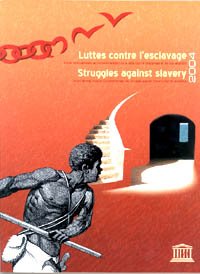
In observance of the 50th week (08/21-08/27) of UNESCO’s 60th anniversary celebrations, we have selected for you a set of links and events dedicated to the Struggle Against Slavery.

In order to encourage reflection, scientific and historical research and the dissemination of information on slavery and its consequences, UNESCO’s Culture and Education Sectors develop new initiatives to combat the lingering consequences of the slave trade and slavery such as discrimination and racism.

In 1993, UNESCO approved the implementation of the "Slave Route" Project before moving on with the publication of "From Chains to Bonds: the Slave Trade Revisited" (1998). The idea of a "Route" expresses the dynamics of the movement of peoples, civilizations and cultures, while that of "slave" addresses not only the universal phenomenon of slavery, but also in a more precise and explicit way the transatlantic slave trade in the Atlantic, and slave trade the Indian Ocean and the Mediterranean. >> More

The transatlantic slave trade is often regarded as the first system of globalization. Millions of Africans were torn from their homes, deported to the American continent and sold as slaves. Two outstanding decrees for abolition were produced during the nineteenth century: the Abolition Bill passed by the British Parliament in August 1833 and the French decree signed by the Provisional Government in April 1848. In the United States, Abraham Lincoln extended the abolition of slavery to the whole Union in the wake of the Civil War in 1865. The abolition of slavery became the 13th Amendment to the Constitution of the United States.

Yet, despite the abolition of slavery, modern forms of slavery persist . In the context of the "Project to Fight Human Trafficking in Africa", UNESCO aims to promote effective and culturally appropriate policy-making to combat the trafficking of women and children in Africa. Today various international conventions define slavery and human trafficking as a "crime against humanity" punishable by international law. See legal instruments.

Events
*
23 August: International Day for the Remembrance of the Slave Trade and its Abolition. The night of 22 to 23 August 1791 marks a crucial date in the abolition of the transatlantic slave trade. The Director-General of UNESCO invites the Ministers of Culture of all Member States to organize events every year on that date, involving the entire population of their country and in particular young people, educators, artists and intellectuals. >> More

*
19-22 September, 2006: 50th Anniversary of the 1st International Congress of Black Writers and Artists. Nobel Prize Laureate Wole Soyinka, a Goodwill Ambassador to UNESCO, President of the African Community of Culture and the W.E.B. Du Bois Institute for African and African American Research at Harvard University will celebrate the event at the Sorbonne University and the UNESCO Headquarters in Paris. UNESCO is officially bringing its technical and financial support for this event mainly through the Division of Cultural Policies and Intercultural Dialogue and the Africa Department. >> More

* UNESCO, in collaboration with the Schomburg Center for Research on Black Culture (New York), has set up the Traveling Exhibition "Lest We Forget: Triumph over Slavery".This exhibition focuses on the centrality of the slave trade in the making of the modern world.

Read more
* UNESCO Programmes around this project
* History of the Slave Trade
* The 2006 Slave Route Project Brochure

*
The Struggle Against Slavery Brochure